
Last updated November 25, 2026
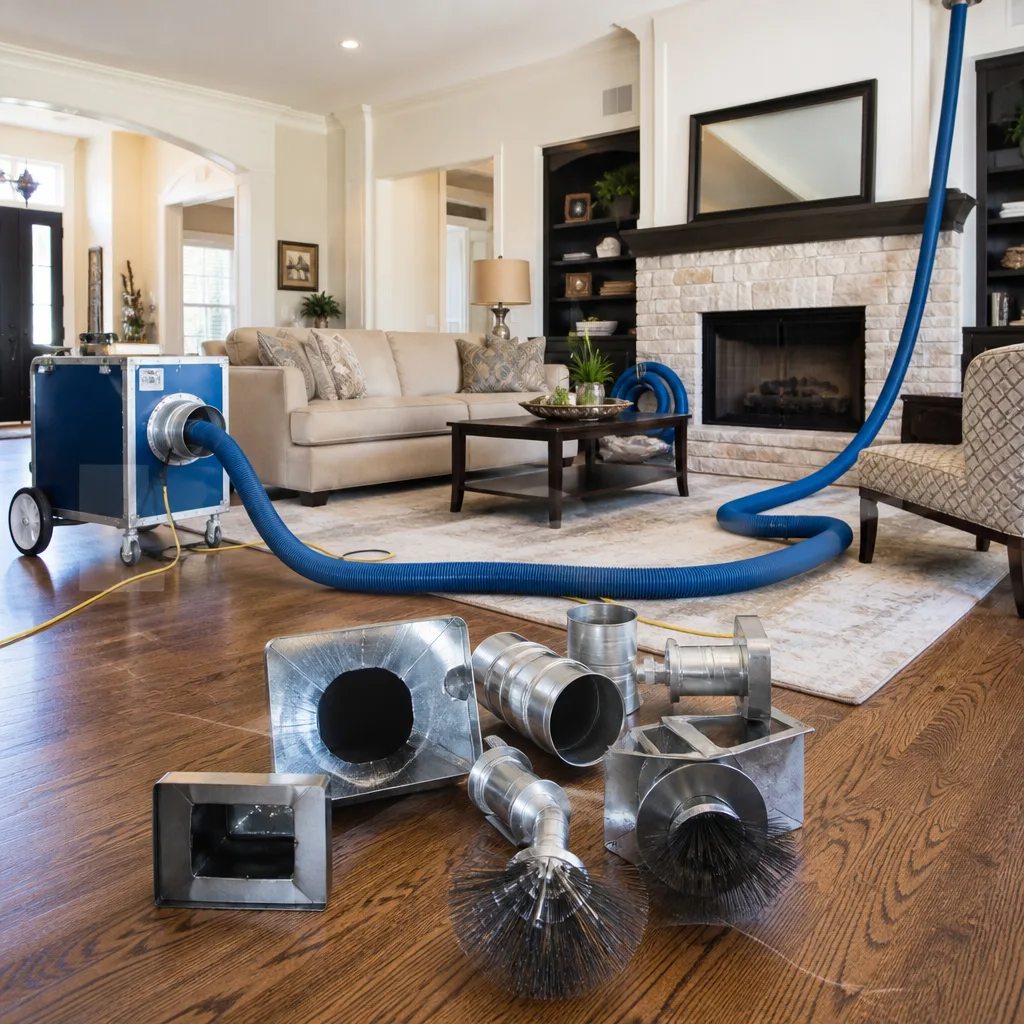 Whole-home duct cleaning
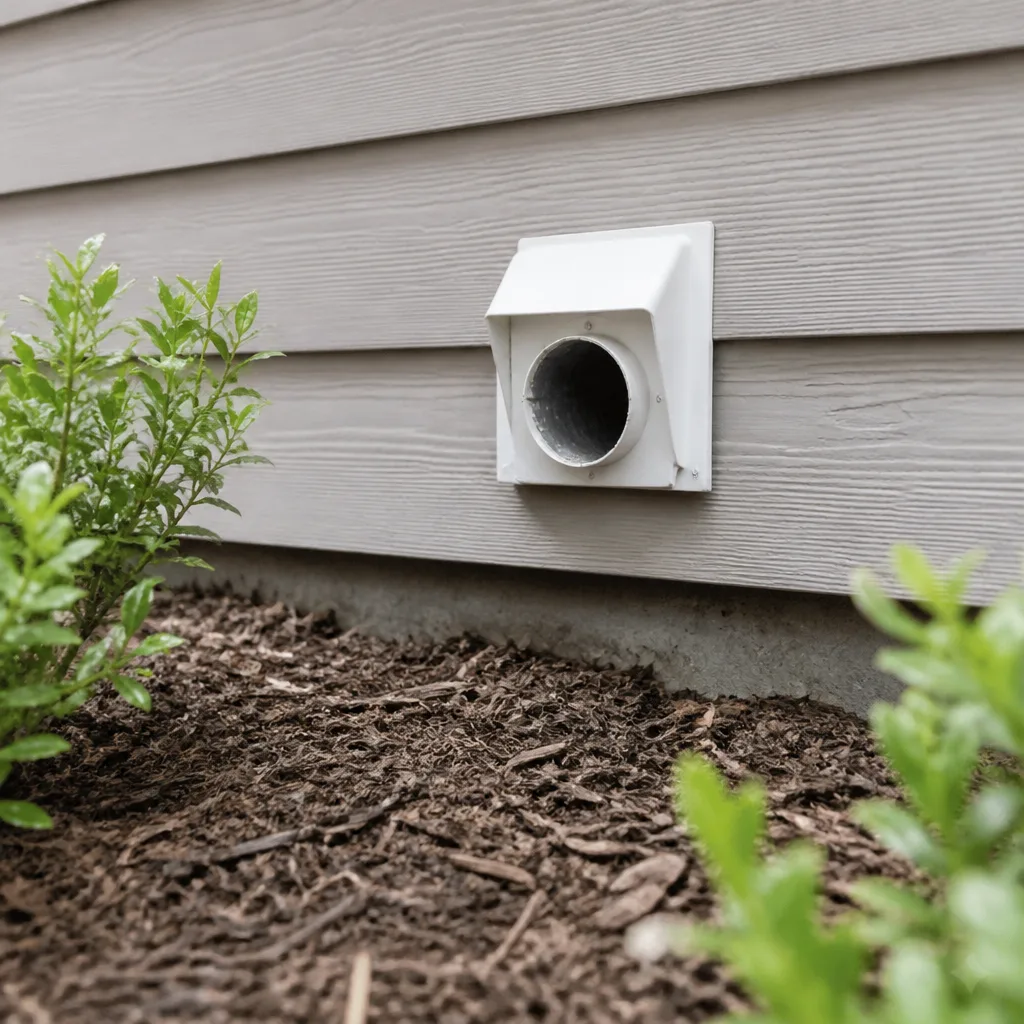 Dryer vent cleaning
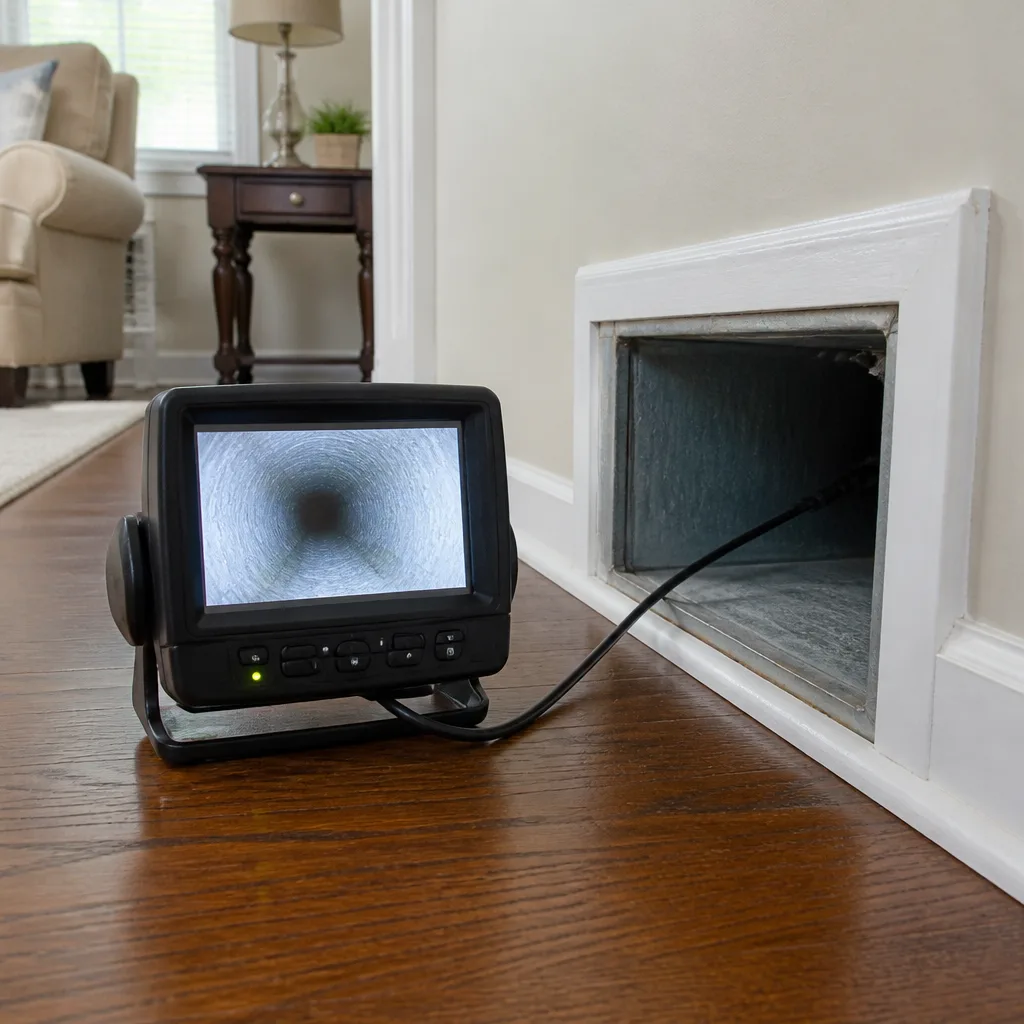 Camera inspection
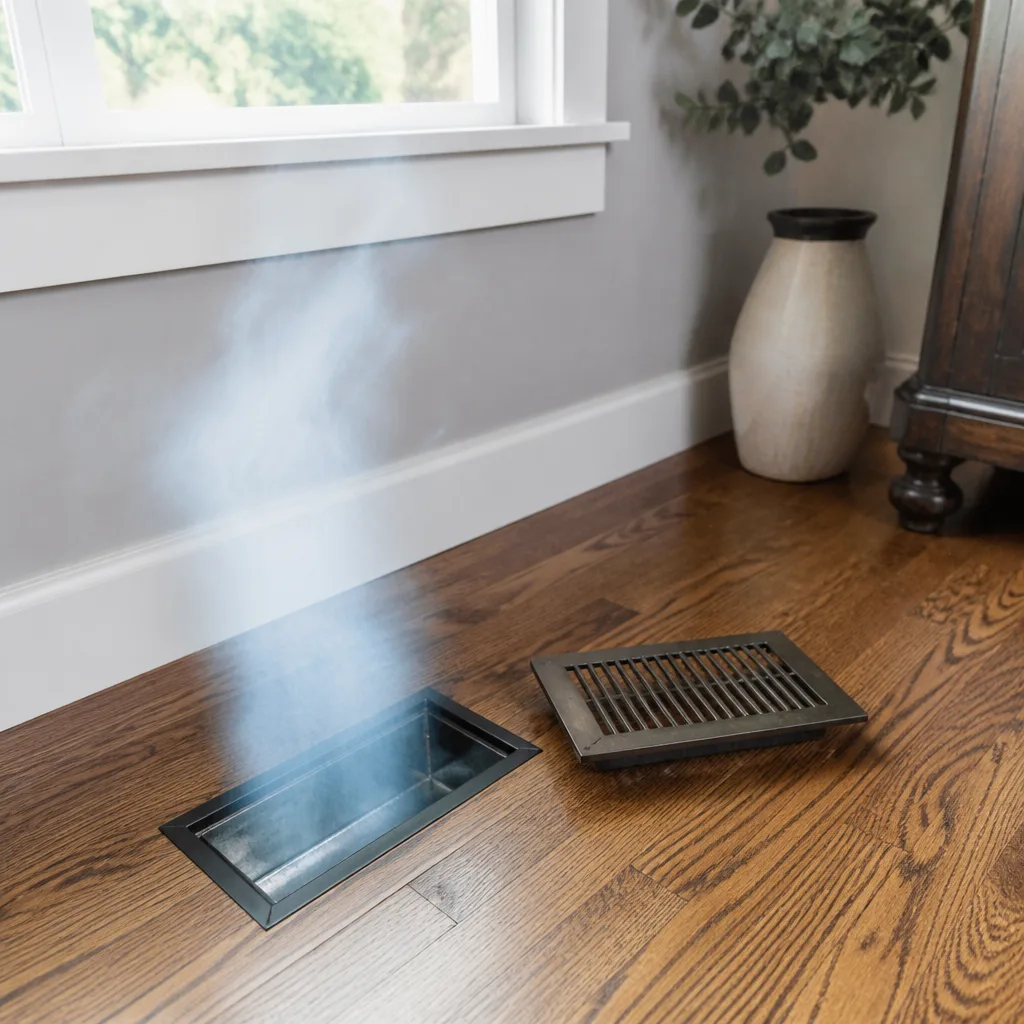 Sanitizing & deodorizing
Whole-system duct and dryer vent check with before-and-after photos - you see exactly what came out of your vents
That "$99 whole-house special" is a bait ad - the real number appears once they are in your hallway, or the "clean" is a shop-vac at the register. We photograph the inside of your ducts before and after instead.
How to Hire an Air Duct Cleaning Contractor in Costa Mesa: A Step-by-Step Guide
A $49 duct cleaning special and a $400 full-system service both describe themselves as “thorough” and “complete.” The words on the coupon and the words on the work order are nearly identical. What separates them never shows up in the ad copy: it’s the equipment in the van, the scope written on the invoice, and the questions a contractor is willing to answer before they ever step through your door. In this guide, we’ll walk you through the exact screening process we’d use ourselves as a Costa Mesa homeowner, from the equipment questions to ask on the phone to the verification you’re entitled to once the job is done. By the end, you’ll know how to tell a professional air-pathway specialist from a coupon operator who’s renting a vacuum for the afternoon.
Quick Answer
To hire an air duct cleaning contractor in Costa Mesa, ask three screening questions before booking: what vacuum system they use (truck-mounted or high-CFM portable with negative-air containment), whether they carry a video inspection camera for before-and-after documentation, and exactly what the written work order covers. A legitimate contractor answers all three without hesitation, prices the whole system rather than each vent, and shows you photos of your own ducts before and after the job. If a quote is built on a per-vent price or a coupon you can’t get in writing, that’s your answer.
Styles & brands we work with
- Whole-home duct cleaning
- Dryer vent cleaning
- Camera inspection
- Sanitizing & deodorizing
Table of Contents
- The Equipment Questions to Ask Before You Book
- Credentials, Insurance, and Why NADCA Is a Floor
- Red Flags in the Quote Process
- How to Structure the Job Scope in Writing
- Post-Job Verification: What You’re Entitled to See
- What’s Specific to Costa Mesa Homes and Air
- A Printable Question List for the Phone Call
- Common Mistakes to Avoid
The Equipment Questions to Ask Before You Book
Equipment is the single best predictor of whether a duct cleaning job is real. A contractor who shows up with a shop vacuum and a spinning whip brush is doing cosmetic work. A contractor with a negative-air machine and a contact-cleaning brush system is doing the job the way the industry defines it. Ask these questions on the phone, before anyone comes out.
1. What vacuum system do you run? The two professional approaches are truck-mounted vacuums (typically in the 4,000 – 7,000 CFM range) and high-powered portable negative-air units (usually 2,000+ CFM for a proper job). A consumer-grade shop vacuum moves under 200 CFM and cannot create the pressure differential needed to pull debris out of a 20-foot trunk line. When we clean ducts in Costa Mesa, we run both Rotobrush and Nikro professional systems, which cover contact cleaning and negative-air extraction in the same visit. Ask what CFM the contractor’s equipment is rated at. If they can’t tell you, that’s information in itself.
2. What brush system do you use? Professional brush systems are either rotary (a spinning brush head on a flexible rod) or compressed-air whips. Both agitate dust off the duct walls so the vacuum can capture it. The key detail is whether the brush is driven by the vacuum line itself or is a standalone tool dragged through by hand, because a brush without simultaneous extraction just redistributes dust into the room.
3. Do you carry a video inspection camera? A borescope camera lets the contractor see inside the ductwork before and after cleaning, and lets you see it too. A contractor without a camera is asking you to trust their word on work you can’t inspect. A professional one will offer the footage before you ask.
4. How do you contain the work area? Look for the phrase “negative air.” Abatement Technologies negative-air equipment is the same category of machinery used in professional mold and contaminant remediation, and it keeps dust from migrating into your living space while the job runs. If you’re dealing with post-renovation dust, mold concerns, or a house with allergy-sensitive occupants, this is the equipment that matters.
If you want a broader primer on what a proper cleaning actually involves, our air duct cleaning page walks through the full process step by step.
Credentials, Insurance, and Why NADCA Is a Floor
NADCA membership (the National Air Duct Cleaners Association) is the industry baseline, and it’s a good sign. It means the contractor has agreed to a code of ethics, has access to the association’s published standards, and is at least nominally plugged into the trade. But membership is a floor, not a ceiling. In California, a few additional verifications matter more than the logo on the van.
Verify the license type, not just the license. Ask for the contractor’s CSLB license number and look it up on the Contractors State License Board website yourself. For duct cleaning alone, a general cleaning or handyman classification may legally apply. The moment the contractor touches duct sealing, HVAC coil cleaning, or any system modification, they need a C-20 (HVAC) or C-43 (sheet metal) classification. A contractor who can’t explain which classification covers their work is a contractor who may be operating outside their license class.
Ask for a certificate of insurance, not just a verbal yes. You want a certificate showing general liability coverage with limits appropriate to residential work, and you want it emailed to you before the job starts. A legitimate contractor will email it without argument. Ask specifically whether the certificate is current (insurance expires, and older certificates float around as PDFs).
Ask about worker’s compensation coverage. If a technician is injured in your home and the contractor has no worker’s comp, the liability picture gets complicated fast. This is a small ask that separates serious companies from side-hustle operators.
Look for equipment-specific training, not just a business license. Rotobrush and Nikro both offer manufacturer training programs. Honeywell and Aprilaire both train installers on their filtration and humidity products. None of those replace a state license, but they’re an additional signal that the contractor understands the equipment they’re running instead of just having bought it.
If a contractor checks all four of these boxes and can still answer the equipment questions above clearly, you’re looking at a serious operation. If any one of them falls apart, keep calling.
Red Flags in the Quote Process
The quote process is where the coupon-to-invoice gap opens up. Here are the specific patterns that should end the conversation.
Per-vent pricing. A quote structured as “$25 per vent” or “$30 per register” is a trap for two reasons. First, nobody legitimately knows how many vents your home has before walking the property. Second, per-vent pricing either undercounts the real work (the trunk lines, plenum, and air handler don’t get cleaned at all) or gets padded on the back end. A professional contractor prices the whole system, not the registers.
The “free inspection” that turns into a mold emergency. This is the single most common upsell in the trade. The technician arrives, walks one vent with a flashlight, and emerges with a phone photo of dust that could be present in literally every duct system in the country. That photo becomes a “mold discovery,” which becomes an urgent recommendation for a $600-$1,500 “remediation add-on.” Real mold concerns get verified with a lab test or a proper visual inspection with video documentation, not a dramatic flashlight moment.
Pressure tactics. “This price expires today.” “We have a crew nearby right now, but you need to sign before they move to the next job.” “The truck is already in your neighborhood.” None of these are how a real business books work. They exist to compress your decision window before you have time to compare quotes.
No written estimate before the job. Every legitimate contractor will put the scope, price, and inclusions in writing before work starts. If the first time you see the total is when the technician asks for a signature at the end, that’s the bait-and-switch setup.
No mention of scope beyond “duct cleaning.” A fair quote should cover what’s being cleaned (supply and return ducts, the air handler, the blower compartment, the plenum, the registers and grilles), and whether any extras (dryer vent, coil cleaning, sanitizing) are included. A one-line “duct cleaning: $149” quote is a placeholder for an unknown scope, and unknown scope always resolves upward.
How to Structure the Job Scope in Writing
A legitimate work order is specific and readable. If you can’t point to each item on the page and know exactly what’s being done, the writing is doing its job hiding something. Here’s what to look for in the document a serious contractor sends you.
- Property address and service date. Sounds trivial. It isn’t, because per-vent operations often show up at the wrong address (or dispatch to whichever address in their route book is closest).
- Explicit list of what’s being cleaned. Supply trunk and branch lines, return trunk and branches, register and grille faces, the air handler cabinet, and the blower compartment where accessible. If the blower is excluded, the work order should say so.
- Method statement. Which vacuum and brush system will be used. Whether negative-air containment is being set up. Whether a video camera is deployed. This is the part a coupon operator can never fill in.
- Add-ons named individually. Dryer vent cleaning, coil cleaning, duct sealing, and sanitizing should each be a separate line with a separate price. Bundled into one number, they disappear when the technician decides to “skip that part.”
- A price for the whole system, not per component. The estimate should show one figure for the full job, plus separate line items for any add-ons. No per-vent math.
- Access and furniture-moving responsibilities. Who moves the coffee table? Who unplugs the air handler? A work order that leaves this ambiguous is one where you’ll be asked to pay extra for access.
- Documentation clause. A line stating that before-and-after photos will be provided, and that a copy of the report will be emailed to you afterward.
If you’re combining services (which most Costa Mesa homeowners do, because it’s one visit instead of two), the same detail applies to dryer vent cleaning and HVAC cleaning: each service should have its own scope line and price. One flat price per system agreed before work starts protects you here. A vague bundle number is where the surprise invoice comes from.
Post-Job Verification: What You’re Entitled to See
You are the customer for the entire duration of the job, not just until the invoice is signed. Here’s what you’re entitled to request, and how to ask for it without awkwardness.
1. Before-and-after photos of your own ducts. Not stock photos from a brochure. Photos of your ducts, taken inside the trunk lines and at the register boots. Ask to see them on the technician’s phone screen before they pack up. A serious contractor organizes their photos by job and expects the ask.
2. Access to see the blower compartment. Ask the technician to show you the blower motor compartment before they replace the cover. If the cleaning was real, the compartment will be visibly cleaner than it was at the start of the job. If it’s still caked with dust, the trunk line up the machine likely got cleaned while the working end of the system did not.
3. Airflow readings, before and after. A handheld manometer or flow hood measurement at the registers gives you a number. Not every job requires this, but a contractor doing a full-system cleaning should be able to take the measurement. Ask for it. The number gives you a baseline for the next time you call.
4. Video camera footage. If the contractor carried a camera in (and a serious one did), they have footage. Ask to see the trunk line segment they pulled the camera through. The difference between the “before” and “after” of a properly cleaned trunk line is dramatic.
5. A written service report. A proper job ends with a documented summary: what was cleaned, what condition was found, what was recommended but not performed (and why), and which products were used. If the contractor ran Guardsman sanitizing products or installed a Honeywell or Aprilaire filtration component, those products should appear by name in the report. Traceability is part of the job.
If a contractor resists any of these five, that’s not a technical disagreement, it’s a transparency problem. You’re entitled to see what you paid for.
What’s Specific to Costa Mesa Homes and Air
Costa Mesa is not a standard suburban duct-cleaning market. The housing stock is unusually varied. The city runs from mid-century tract homes on the Eastside (many with original 1960s and 1970s duct chases still in place) through older downtown bungalows near the Westside, up into the hillside custom homes above Mesa Verde and along the border with Newport Beach, and out to the newer attached developments around South Coast Metro. Each of those housing types has a different duct system, and a contractor who prices every house the same way isn’t paying attention to the actual job.
A 1960s Eastside home often has short, wide, rigid galvanized trunk lines with very few branches, which clean efficiently if the contractor knows how to negotiate the transitions. A hillside custom home above Mesa Verde might have three separate HVAC systems, long flex-duct runs through attic spaces, and zoned dampers. A South Coast Metro townhome might have the entire air handler tucked into a closet ceiling with 12 feet of accessible duct and nothing else. If the contractor quotes all three jobs at the same rate, the rate is a marketing number, not a real price.
The air itself matters too. Costa Mesa sits close enough to the coast that dust is consistently fine and light rather than heavy and clumping, which means it accumulates in trunk lines and settles in blower housings rather than dropping out in vertical branches. And renovations are constant in the older parts of the city, which means post-renovation duct cleaning (containment, negative air, and a proper blower compartment access) is one of the most common jobs we see here. That’s the job where Abatement Technologies negative-air equipment earns its keep.
Duct sealing also comes up constantly in Costa Mesa, because the older rigid-duct systems are the ones most likely to have failed mastic joints at the branch takeoffs. If you’re paying to cool a house and the trunk line is leaking 15% of the air into the attic or crawlspace, no amount of cleaning will reduce your bill. For an overview of how we approach that side of the work, our Costa Mesa Air Duct Cleaning Co home page lays out all five service categories we handle in one visit.
A Printable Question List for the Phone Call
Make the first call a screening call. Ask these questions in order. A contractor who answers all ten clearly is worth booking. A contractor who deflects on two or three is not.
- What vacuum system do you carry, and what’s the CFM rating? (Looking for: truck-mounted or high-CFM portable, not a shop vac.)
- Do you use a rotary brush system, and what brand? (Rotobrush and Nikro are the two industry standards.)
- Do you carry a video inspection camera? (Yes is the only acceptable answer.)
- Do you set up negative air containment? (Especially important if anyone in the house has allergies, asthma, or you’ve recently renovated.)
- What CSLB license classification covers this work, and what’s the license number? (You’ll look it up yourself.)
- Can you email a certificate of insurance before the job? (Yes is the only acceptable answer.)
- Do you carry worker’s compensation coverage? (Yes is the only acceptable answer.)
- What’s the price for a whole-system cleaning on a house like mine, and is that a flat price per system or per vent? (Looking for: flat price, with the scope spelled out in writing.)
- What does the written work order include, and which services (dryer vent, coil cleaning, sanitizing) are separate line items? (Looking for: specificity.)
- Will I get before-and-after photos of my own ducts, and a written service report afterward? (Yes is the only acceptable answer.)
If you want a straight answer to those ten questions from us, call (855) 337-2150. We answer 24/7. Fast dispatch from 7am to 7pm, Sunday through Friday.
Common Mistakes to Avoid
- Booking the $49 or $99 coupon because it’s the cheapest option on the page. That price is not the price of a duct cleaning. It’s the price of getting a technician in the door. The real price emerges once the technician is inside, usually with a mold finding or an “extra vent” upcharge. A legitimate quote is a whole-system number you can compare apples to apples.
- Assuming all duct cleaning contractors in Costa Mesa do the same job. Many are single-tool operators running a whip brush and a shop vac. Others run professional-grade equipment capable of negative-air containment and video documentation. The vocabulary on the van is identical. The job is not.
- Skipping the license lookup. Handing a license number to a contractor without checking it on the CSLB site is the same as not asking. Duct sealing and HVAC coil work in California require specific classifications, and a contractor operating outside their class may not be covered by their liability insurance for the work they’re doing.
- Treating NADCA membership as the entire credential check. Membership tells you the contractor has signed up for the industry’s ethics code. It says nothing about equipment, insurance currency, or whether the person in your house actually knows how to run the machine.
- Not asking for a written work order. Verbal estimates disappear the moment the invoice appears. Any contractor who won’t send scope and price in writing before the job is a contractor who plans to negotiate the price after the work is complete.
- Missing the post-job documentation window. Once the technician has packed up and driven away, your ability to ask for the before-and-after photos or the video footage ends. Ask before the truck leaves.
- Assuming a sanitizing step is standard. It isn’t. Some contractors spray an unnamed product and call it sanitizing. A serious one names the product line (Guardsman, in our case) and documents it in the service report, so you have a traceable record of what was put into your ducts.
See the difference
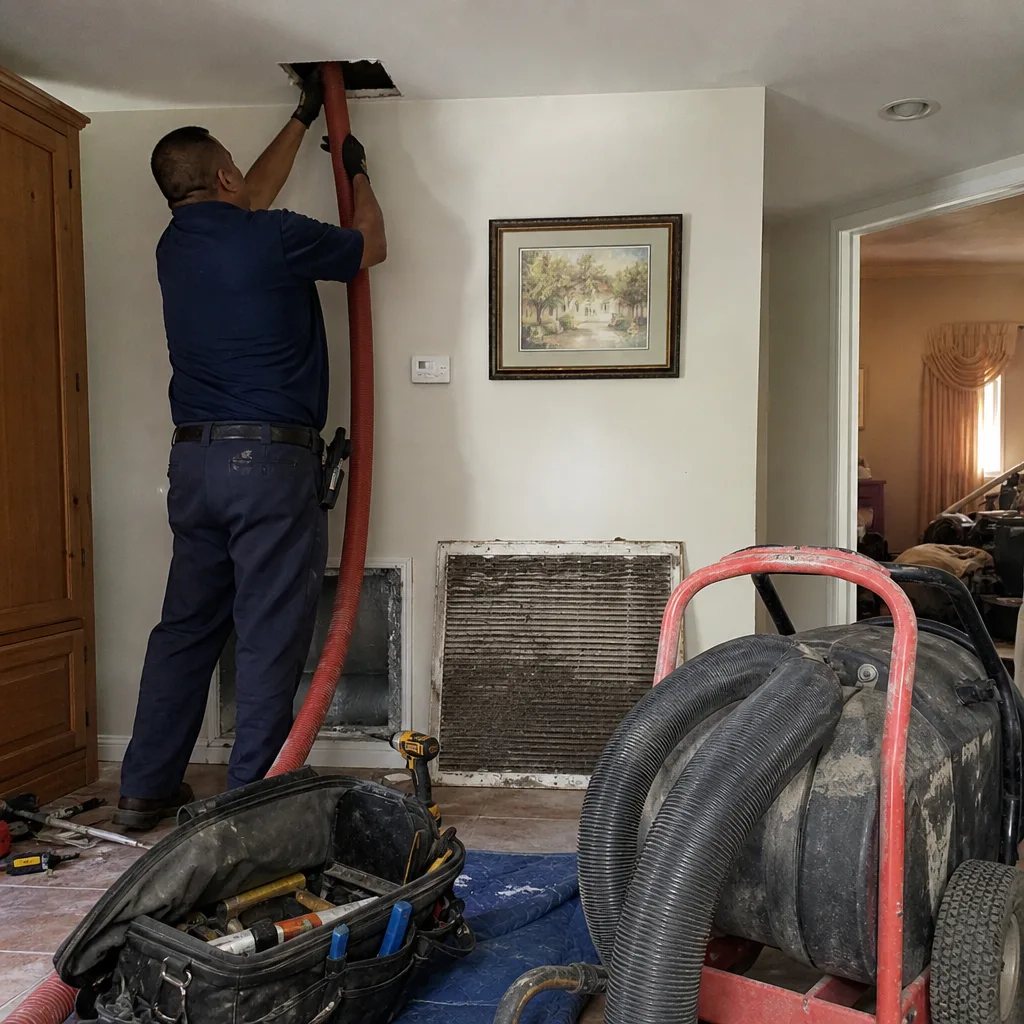 Before
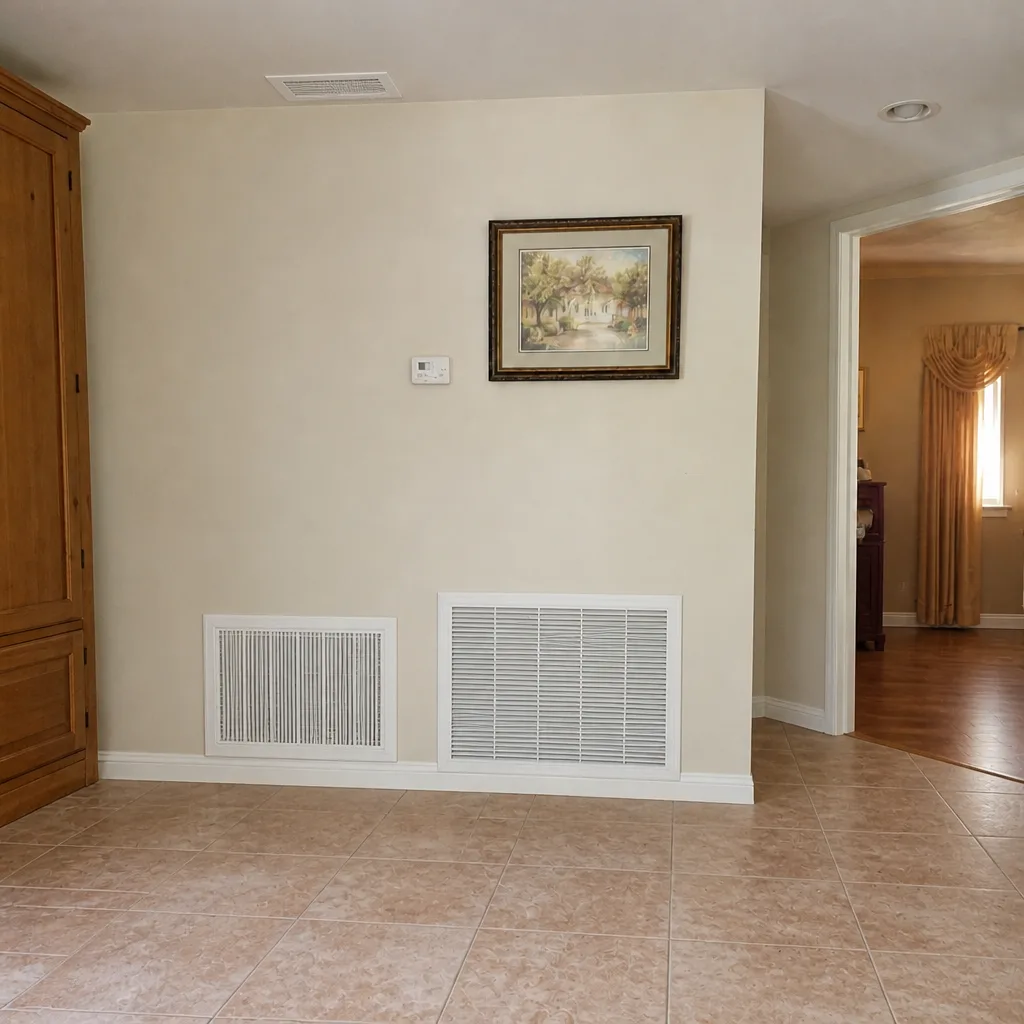 After
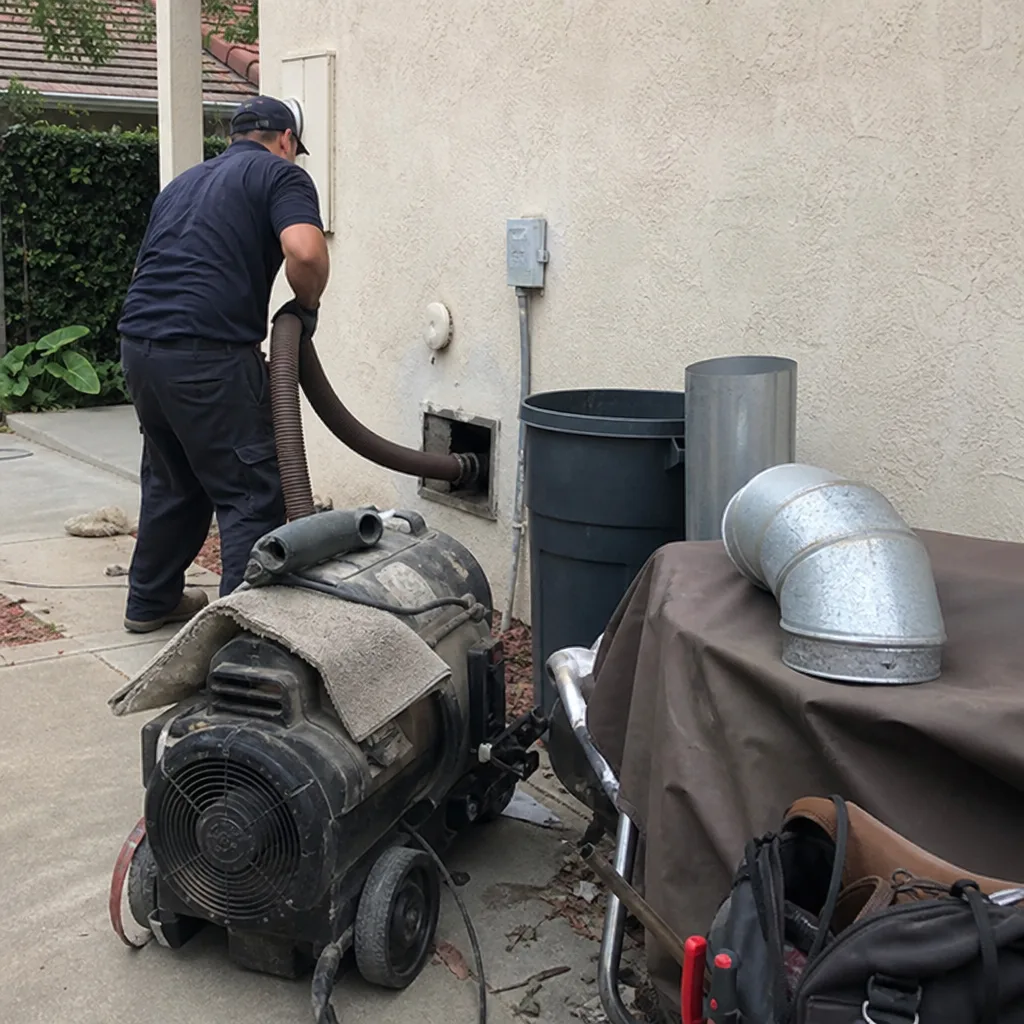 Before
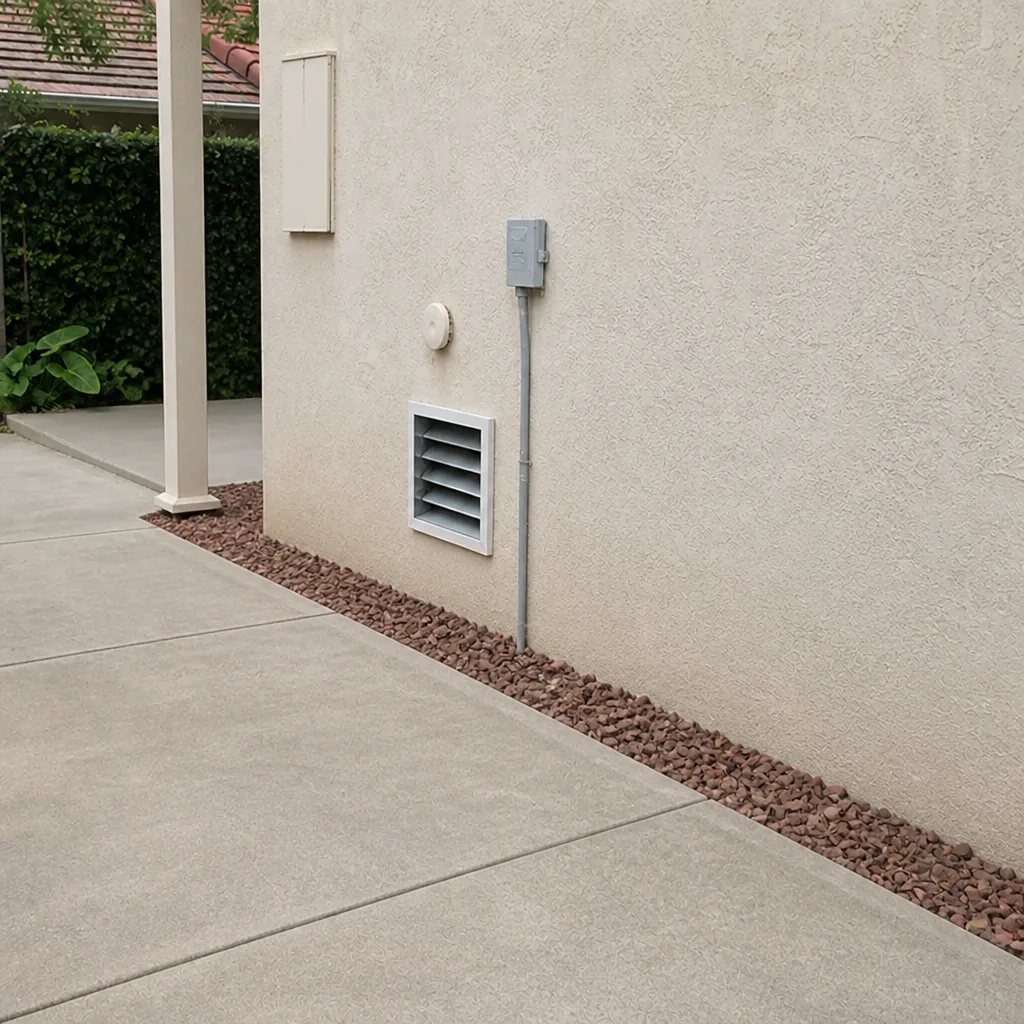 After
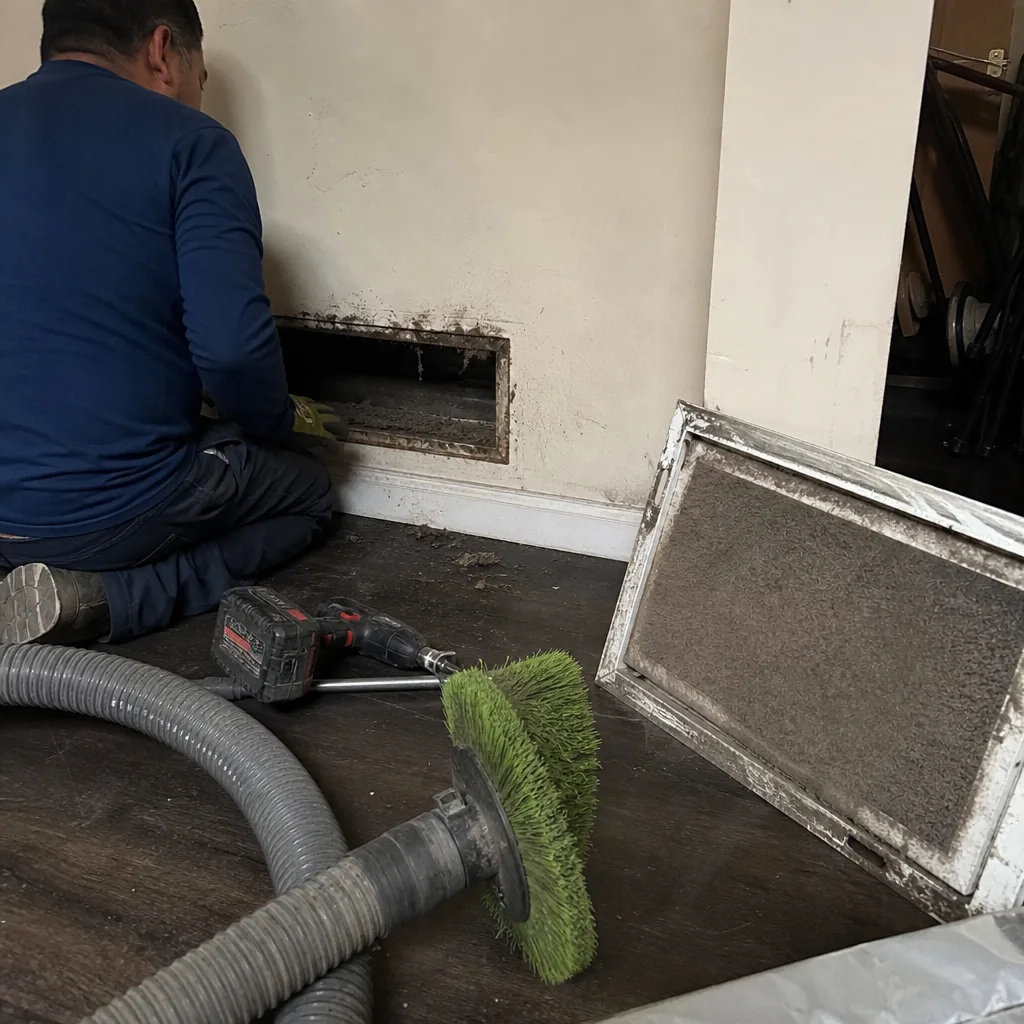 Before
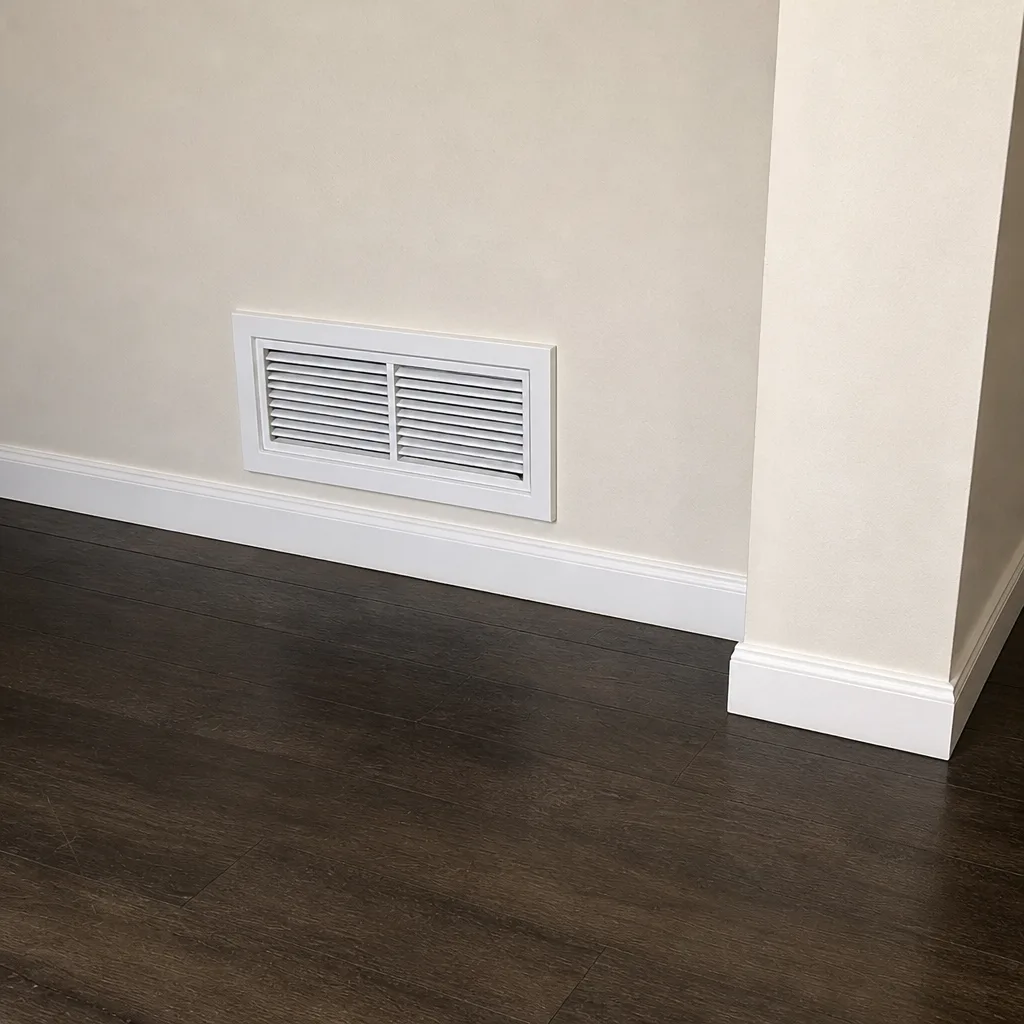 After
When to Call a Professional
Some situations don’t require a full-system cleaning, just a conversation. Visible dust blowing out of the registers the moment the system comes on is a real signal. So is a musty or stale smell that gets stronger when the air runs, which usually points to moisture in the system or the plenum. Recent renovation work that generated drywall dust, sawdust, or insulation fiber is one of the most common reasons homeowners in Costa Mesa call us, because that dust is now sitting in every trunk line. Unexplained allergy symptoms that get worse indoors, a blower motor that keeps collecting visible dust, or a system that hasn’t been serviced in years all justify an inspection. If the airflow at some registers feels weak while others feel strong, that’s often duct leakage or a damaged branch takeoff, which is a repair-and-sealing job, not just a cleaning.
Costa Mesa Air Duct Cleaning Co offers free estimates in Costa Mesa. Call (855) 337-2150 and we’ll help you sort out which service category actually matches what you’re dealing with.
Frequently Asked Questions
A whole-system residential cleaning in Costa Mesa typically falls in the $350 – $700 range depending on square footage, system count, and accessibility, with add-ons like dryer vent cleaning, coil cleaning, duct sealing, or sanitizing billed as separate line items. Per-vent pricing and coupon teaser rates are not real prices, because they don’t cover the trunk lines and air handler where the actual debris lives. The written estimate sets the final price. Call (855) 337-2150 for an exact quote. Estimates are free.
Cheap quotes are usually cheaper because they leave out the equipment, the scope, or both. A $99 quote for a “whole house duct cleaning” typically uses a small vacuum and a whip brush to clean the register boots, which is roughly 5% of the work that actually matters. It also typically sets up an on-site upsell conversation once the technician sees the ducts. A legitimate quote covers the trunk lines, air handler, and blower compartment, includes video documentation, and is a fixed number before the job starts. Call (855) 337-2150 to get a scope-based quote you can compare fairly.
Ask for three things before the technician leaves: before-and-after photos of your own ducts (not stock images), a peek inside the blower compartment after the cover comes off, and a copy of the written service report documenting what was cleaned and what products were used. A serious contractor expects these asks and hands them over without argument. Call (855) 337-2150 to schedule.
No. NADCA membership is not a license, and California does not require duct cleaning contractors to hold a specific state certification for cleaning alone. What California does require is a valid CSLB license, with the correct classification for the scope of work (C-20 for HVAC work, C-43 for sheet metal work, if the job involves sealing or modifications). NADCA is a useful baseline; it is not a substitute for checking the license and insurance. Call (855) 337-2150 with any questions about what applies to your job.
For most Costa Mesa homes, a full-system cleaning every 3 to 5 years is reasonable, with additional cleanings after major renovation work or after any water intrusion event that may have affected the ductwork. Homes with pets, allergy-sensitive occupants, or original 1960s rigid-duct systems on the Eastside often benefit from an inspection more often, even when a full cleaning isn’t necessary. Call (855) 337-2150 and we’ll tell you honestly if you don’t need the service yet.
Cleaning removes dust and debris from the air pathway. Sanitizing is a separate step that treats the surfaces with a documented disinfectant (we use Guardsman-branded products) after cleaning is complete, and is optional. Duct sealing is a repair step that closes leaks at joints and branch takeoffs, which is a separate scope and often requires a different license classification. All three are separate services, and a legitimate work order will spell out which are included and at what price. Call (855) 337-2150 to talk through which applies to your home.
The Bottom Line
Hiring a duct cleaning contractor in Costa Mesa comes down to four screenings: equipment, credentials, scope in writing, and post-job verification. A contractor who can name their vacuum system and CFM rating, show a current CSLB license and insurance certificate, price the whole system rather than per vent, and hand you before-and-after photos at the end of the job is a real one. A contractor who deflects on any of those four is not, regardless of what the coupon says. Take ten minutes to screen the first call, and the whole rest of the process gets simpler.
If you’d like to run those questions by us directly, Costa Mesa Air Duct Cleaning Co offers free estimates. Call (855) 337-2150. We answer 24/7. Fast dispatch from 7am to 7pm, Sunday through Friday.
Written by the team at Costa Mesa Air Duct Cleaning Co.