
Last updated November 25, 2026
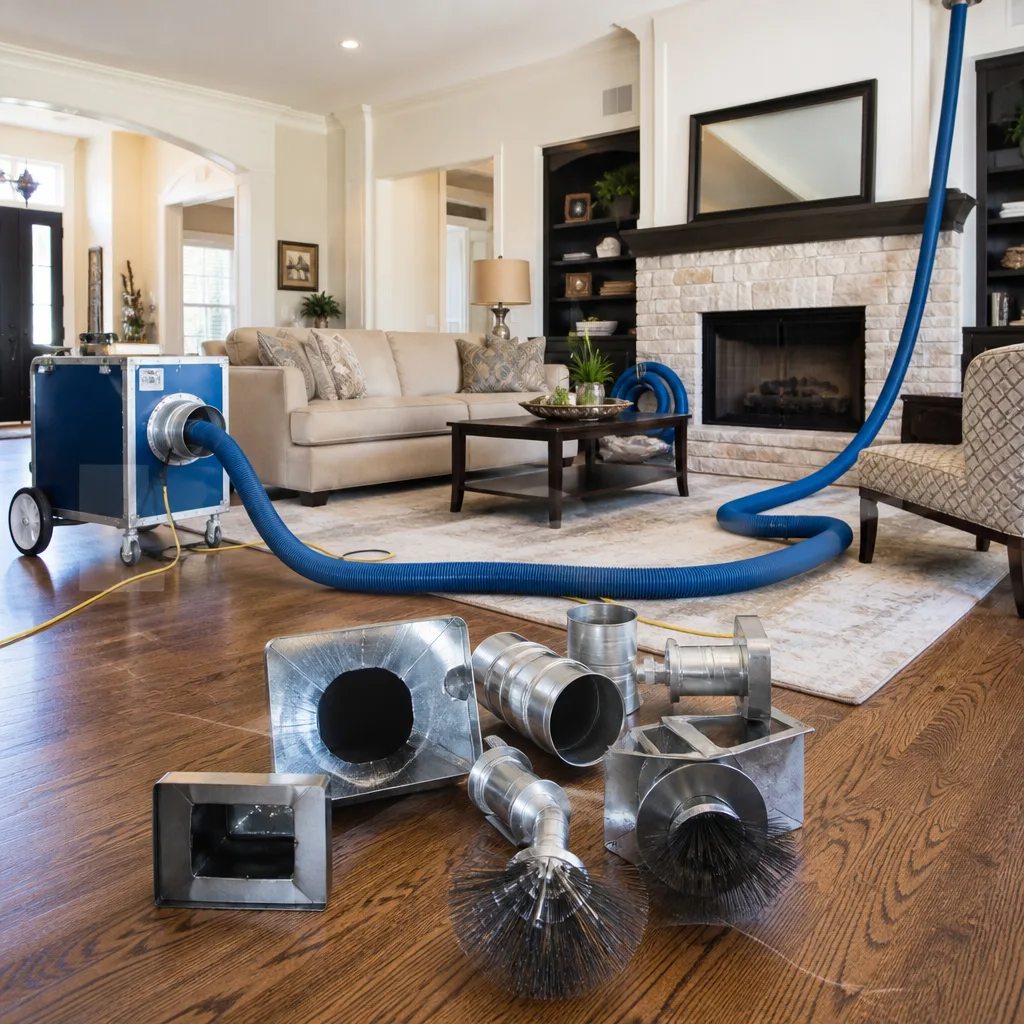 Whole-home duct cleaning
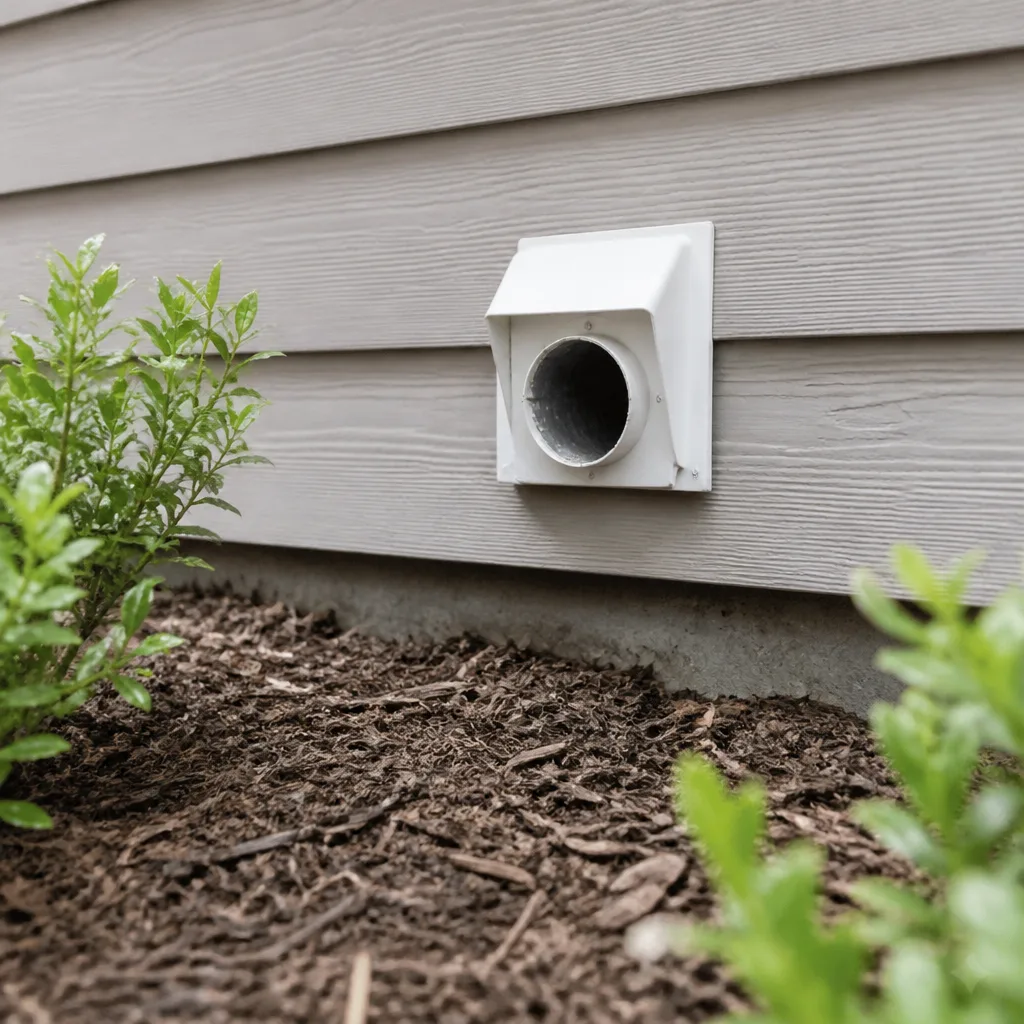 Dryer vent cleaning
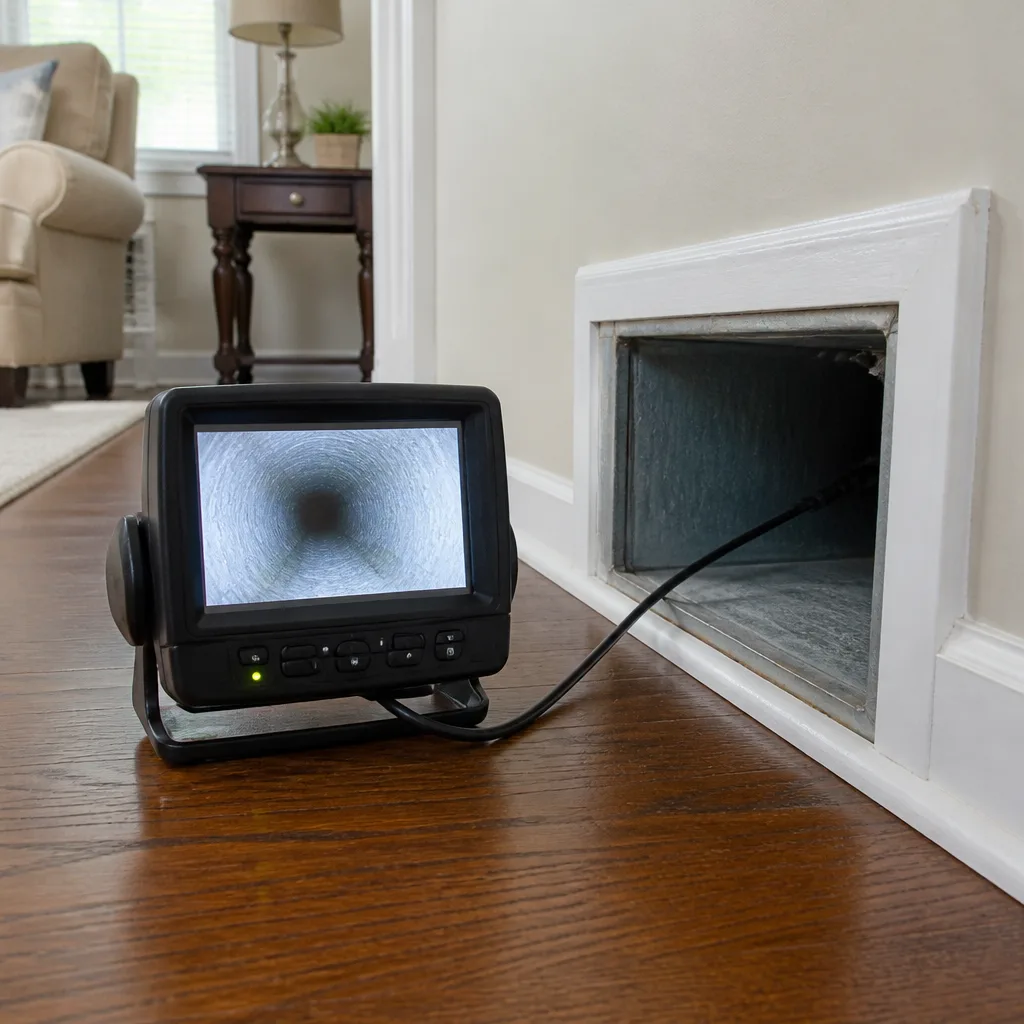 Camera inspection
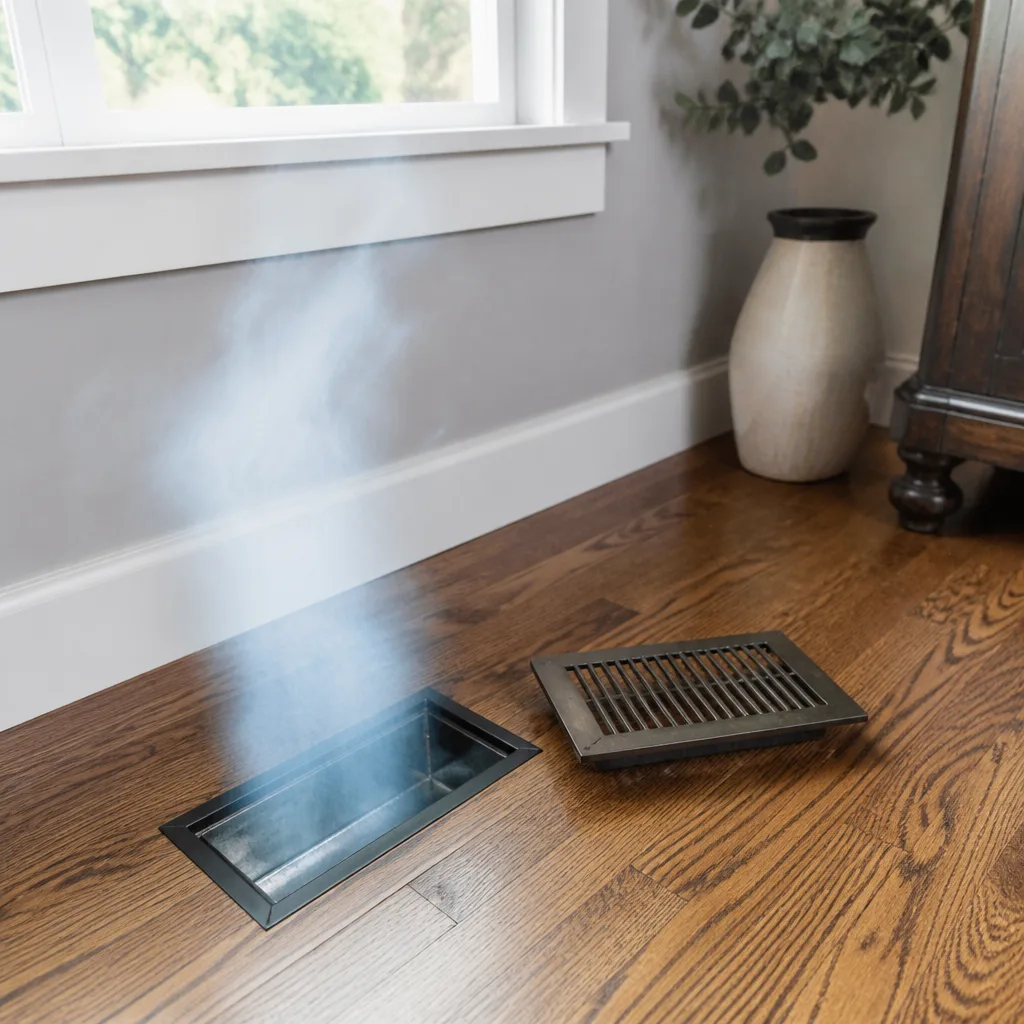 Sanitizing & deodorizing
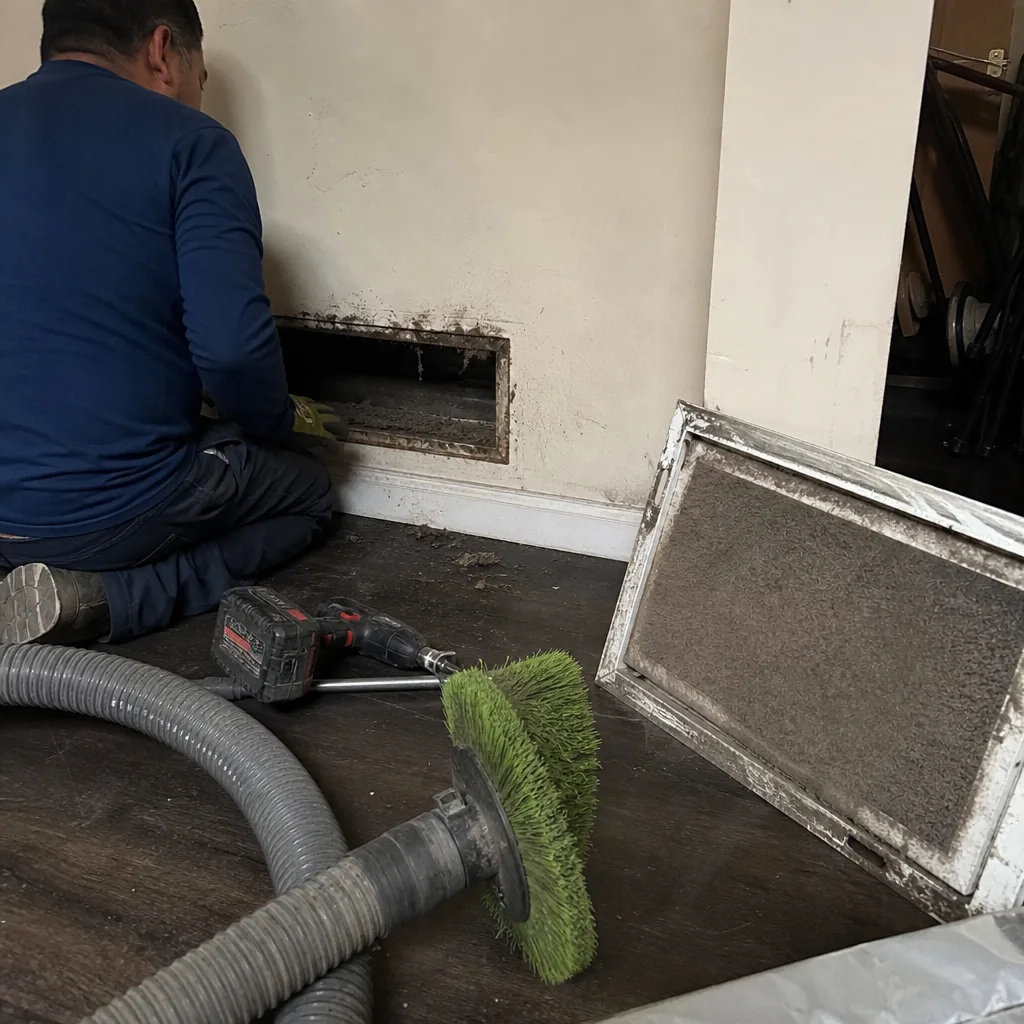
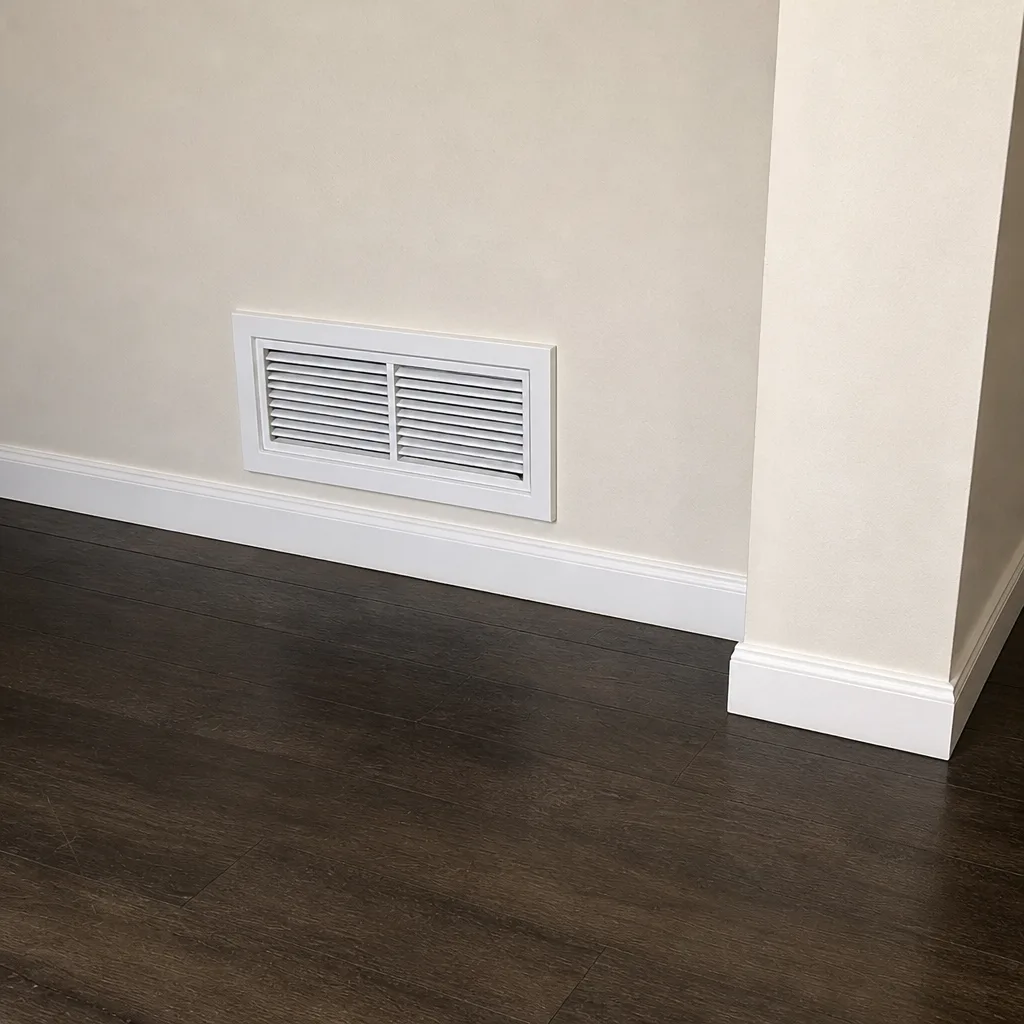
Whole-system duct and dryer vent check with before-and-after photos - you see exactly what came out of your vents
That "$99 whole-house special" is a bait ad - the real number appears once they are in your hallway, or the "clean" is a shop-vac at the register. We photograph the inside of your ducts before and after instead.
Air Duct Cleaning Maintenance Checklist for Costa Mesa Homeowners
The filter you changed last month may be hiding a bypass gap that’s routing unfiltered air straight past it and into your supply ducts. That gap sits at the filter slot, the plenum seams or a sagging flex connection, and it never shows up on a reminder app. Coastal-plain Costa Mesa homes built between the 1960s and 1990s were framed and ducted for a mild climate, which means the ductwork often sits in an attic that bakes every August and cools fast every evening. What follows is a structured inspection protocol, not a generic reminder list: monthly, quarterly and annual tasks tied to the failure points this housing stock actually produces, plus a documentation log a technician can read at a glance.
Quick Answer
A workable air duct maintenance checklist for a Costa Mesa home covers four rhythms: monthly filter and return-grille checks, quarterly visual inspection of the plenum, register boots and flex duct runs, an annual full-system assessment timed before summer, and event-triggered checks after wildfire smoke or a renovation. The single most skipped item is static-pressure verification, because it’s what tells you whether your filter is actually protecting the system or quietly starving the blower.
Styles & brands we work with
- Whole-home duct cleaning
- Dryer vent cleaning
- Camera inspection
- Sanitizing & deodorizing
Table of Contents
- Monthly Tasks: The Filter Slot and the Return
- Quarterly Tasks: Inspecting Flex Duct Without Opening Walls
- The Annual Assessment and When to Schedule It
- Wildfire Smoke: Post-Event Inspection Triggers
- Filter MERV Ratings and Static Pressure
- Building a Documentation Log That a Technician Can Use
- Common Mistakes to Avoid
- When to Call a Professional
Monthly Tasks: The Filter Slot and the Return
Most maintenance advice stops at “change the filter.” The filter slot is where a large share of real duct contamination enters the system, and it takes a flashlight and about four minutes to check. A filter that fits loosely in its channel, or a slot with no gasket or seal, lets air travel around the filter media instead of through it. In a Costa Mesa tract home with a hall return, the filter frame is often set into drywall with a thin lip of clearance on two sides. That clearance is your bypass.
Here’s the monthly routine, done while standing at the return with the system running:
- Switch the thermostat to fan-only and listen at the return grille. Whistling or a strong draft at the edges of the frame suggests the air is moving around the filter, not through it.
- Pull the filter and hold it up to a light. An even grey haze across the media is normal. Dark patches on one side only point to uneven loading, usually a return-path imbalance.
- Run a finger along the slot’s inner channel. Grit, lint or a fine brown film in that channel is a sign of bypass, since filtered air shouldn’t deposit anything downstream of the media.
- Look at the filter frame for foam gasket that has gone flat or peeled. A replacement gasket strip is inexpensive and closes the gap.
- Check the return grille itself for dust build-up on the louvers. A visible grey coat on the grille means the return run behind it is loading up too.
Note the date and what you saw. If the slot shows grit two months in a row, that finding moves to the quarterly list as something to inspect more closely.
Quarterly Tasks: Inspecting Flex Duct Without Opening Walls
Flex duct is the dominant material in Costa Mesa homes from the 1970s through the 1990s, and almost all of it is reachable from the attic access or garage without cutting drywall. The goal here is not to repair anything; it is to spot the four failure modes that develop quietly: sagging, disconnection, compression and crushed inner liner. A sagging run between supports loses its internal diameter, which raises resistance on that branch and forces the blower to work harder against the whole system.
Work through these checks with a flashlight and a phone camera:
- At the plenum. Look where the takeoff collars meet the main trunk. Tug gently. A collar that moves independently of the tape or mastic has lost its seal. The seal should be a continuous bead, not a wrap of cloth tape that has dried out.
- Along each run. Follow the duct from start to finish and count the supports. Flex duct should hang without a visible belly. A run that dips more than a hand’s width between supports is sagging and needs to be re-strapped.
- At the register boots. Pull the register grille and look at the joint between the flex collar and the boot. This is the most common disconnection point in older homes, and it’s often hidden because the ceiling boot sits above the drywall line.
- Compression. Look for runs that are pinched where they pass over a joist, under a pipe or behind a piece of equipment. Any point where the outer jacket is visibly narrowed is a restriction.
- Inner liner. Where a run is exposed, look inside a boot collar with a flashlight. A torn or peeling inner mylar liner sheds into the air stream and is a cleaning or replacement item, not a repair.
Photograph each finding with something for scale. That photo becomes part of the log. When we assess a system with Rotobrush and Nikro equipment, these images let us see where the ductwork has been losing performance between visits.
The Annual Assessment and When to Schedule It
Schedule the annual assessment before the cooling season, not during it. In Costa Mesa, the system is under the most load from late spring through early fall, and a duct system that’s losing 15 or 20 percent of its air to leaking seams will show up as a hot house and a long-running compressor. Finding the leaks in April is cheaper than finding them in August. A proper annual assessment is more than a visual walk-through; it produces a condition record.
A full annual assessment should include:
- A static-pressure reading taken at the air handler, before and after the filter. This is the single number that tells you whether the system is breathing freely.
- A return-path review, confirming the return duct and grille are correctly sized for the blower’s rated airflow.
- Visual inspection of every accessible flex run, plenum collar and register boot, with photographs.
- A check of the air handler’s interior and coil face for dust loading. A loaded coil raises static pressure and reduces delivered airflow.
- An interior look at a sample of supply runs. Interior dust build-up on the duct wall is what determines whether cleaning is due.
- A written condition summary with the findings and the recommended work, priced per job before anything starts.
Year to year, that record does more work than any single service visit. It turns “the house feels stuffy” into “supply static pressure increased across two visits, and three plenum collars show sealant failure.” If you want a baseline before your first assessment, start with air duct cleaning so the interior inspection reflects the true condition of the duct walls.
Wildfire Smoke: Post-Event Inspection Triggers
Orange County wildfire smoke events push fine particulate into homes through return grilles, attic penetrations and any seam that isn’t sealed. Smoke doesn’t need an open window to get into a duct system; it uses the same pressure differences that drive normal return airflow. The checklist items here are triggered by an event, not a calendar. The most useful trigger is simply visible ash on outdoor surfaces in your neighborhood, because that’s the signal that particulate loading is high enough to matter indoors.
After a significant smoke event, add these to the quarterly list:
- Change the filter. A filter that has loaded with fine smoke particulate restricts airflow quickly and should be replaced rather than inspected.
- Look at the return grille face and the ceiling around supply registers for a fine grey film. If you can wipe a grey residue off a supply register louver, particulate has reached the duct interior.
- Smell the return air with the system on. A lingering smoke odor at the return is a sign the duct interior has absorbed it.
- Inspect the air handler cabinet interior. Fine ash settles on the coil face and the blower wheel.
- Check whether the duct jacket or plenum seals show any staining, which indicates a leak path that’s been drawing unfiltered air.
Where a smoke event has left settled particulate on duct interiors, routine contact cleaning with a Rotobrush or Nikro system, combined with negative-air containment, keeps the work from redistributing dust into the house. Abatement-grade negative air equipment is the difference between cleaning a duct system and simply stirring it.
Filter MERV Ratings and Static Pressure
Jumping from a basic filter to MERV 13 is one of the most common mistakes we see in Costa Mesa homes, and it’s usually made with good intentions. A higher MERV filter catches finer particles, but it also adds resistance. If the blower wasn’t sized for the added pressure drop, the motor runs hotter and delivers less air to the rooms. In a home with already-restricted ductwork, a MERV 13 filter can tip a marginal system into a real airflow problem. The right rating is the one your system can carry, and that’s measured, not assumed.
The logic runs like this:
- Low-MERV filters (basic fiberglass or MERV 4-6) protect equipment from large debris but catch very little fine particulate. They add minimal resistance.
- Mid-range filters (MERV 8-11) capture a meaningful share of fine dust and pollen with moderate resistance. For most tract-home systems these are the practical default.
- MERV 13 and above catch finer particulate but add measurable pressure drop. On a system with a 1-inch filter slot, MERV 13 media can be a restriction; a deeper media cabinet changes the equation.
The way to know is static pressure. A reading taken at the air handler tells you the total resistance the blower is working against, and a reading taken before and after the filter isolates the filter’s contribution. That’s why the checklist includes a static-pressure step rather than a “buy a better filter” step. If your readings suggest the system would benefit from a deeper media cabinet, a Honeywell or Aprilaire filter cabinet, installed when the ducts are cleaned, is a way to run higher filtration without choking the blower.
Building a Documentation Log That a Technician Can Use
A good log doesn’t need to be elaborate. It needs three things: a date, a location and a finding. What turns it into a useful tool is when the same finding gets tracked over time. The point isn’t record-keeping for its own sake; it’s building the pattern that lets a technician see degradation on the first visit rather than after three.
A workable log format has five columns:
- Date, so findings line up with seasons.
- Location described in plain terms: “hall return slot,” “plenum collar #3, north side,” “supply boot above second bedroom.”
- Finding in a few words: “gasket flat,” “collar taped, sealant failing,” “filter loading uneven, dark on one side.”
- Action taken: “replaced gasket,” “changed filter to MERV 11,” “photographed, no action.”
- Photo reference if you took one.
Two habits make the log work. First, keep findings in the same words each time so a single entry doesn’t read as four different problems. Second, add a note whenever you change a filter’s MERV rating or add anything to the system, because those are the entries that explain a change in static pressure. When you hand the log to a technician, the photo references and consistent wording let us confirm on arrival which findings have moved and which have stayed put. In our experience, a home with a running log gets a sharper first assessment and a faster conclusion about what’s actually wrong.
Common Mistakes to Avoid
- Treating the filter change as the whole checklist. A new filter in a bypassing slot filters far less air than its rating suggests. The slot, the frame and the return path deserve the same attention as the media.
- Jumping straight to MERV 13. Without measuring static pressure, a high-MERV filter can starve the blower and add strain to a motor designed for lower resistance. Measure first; then choose.
- Ignoring plenum collar sealant until the tape fails. Cloth tape dries and lets go in an attic that heats and cools daily. A visible gap at a collar is a leak every hour the system runs.
- Assuming register grilles are the duct interior. Cleaning a grille doesn’t clean the run behind it. Interior duct-wall condition is what the assessment is about.
- Cleaning ducts after a smoke event without containment. Contact cleaning without negative-air control redistributes fine particulate into the house. Containment is not optional on smoke-affected jobs.
- Rebuilding the filter box by hand when a deeper media cabinet fits. A shop-built filter frame often fits loosely and reintroduces the bypass you were trying to fix. A purpose-made cabinet seats the filter media correctly.
- Skipping a documentation log. Without a record, every finding is a one-off. With one, you can see that a return-path problem has been growing for a year.
When to Call a Professional
Some findings belong on a technician’s list rather than yours. Call us if the filter slot shows grit two inspections running; if a plenum collar or register boot moves when you press it; if any flex run along its length has a visible pinch or torn liner; if the return air smells of smoke after a fire event; if the air handler interior has visible dust on the coil face or blower wheel; or if your own static-pressure readings trend upward across two visits. Those are the findings that call for pro-grade cleaning, sealing or an established filtration cabinet rather than an at-home fix. Costa Mesa Air Duct Cleaning Co offers free estimates in Costa Mesa; call (855) 337-2150 to book one. A written estimate sets the price per job before any work starts.
See the difference
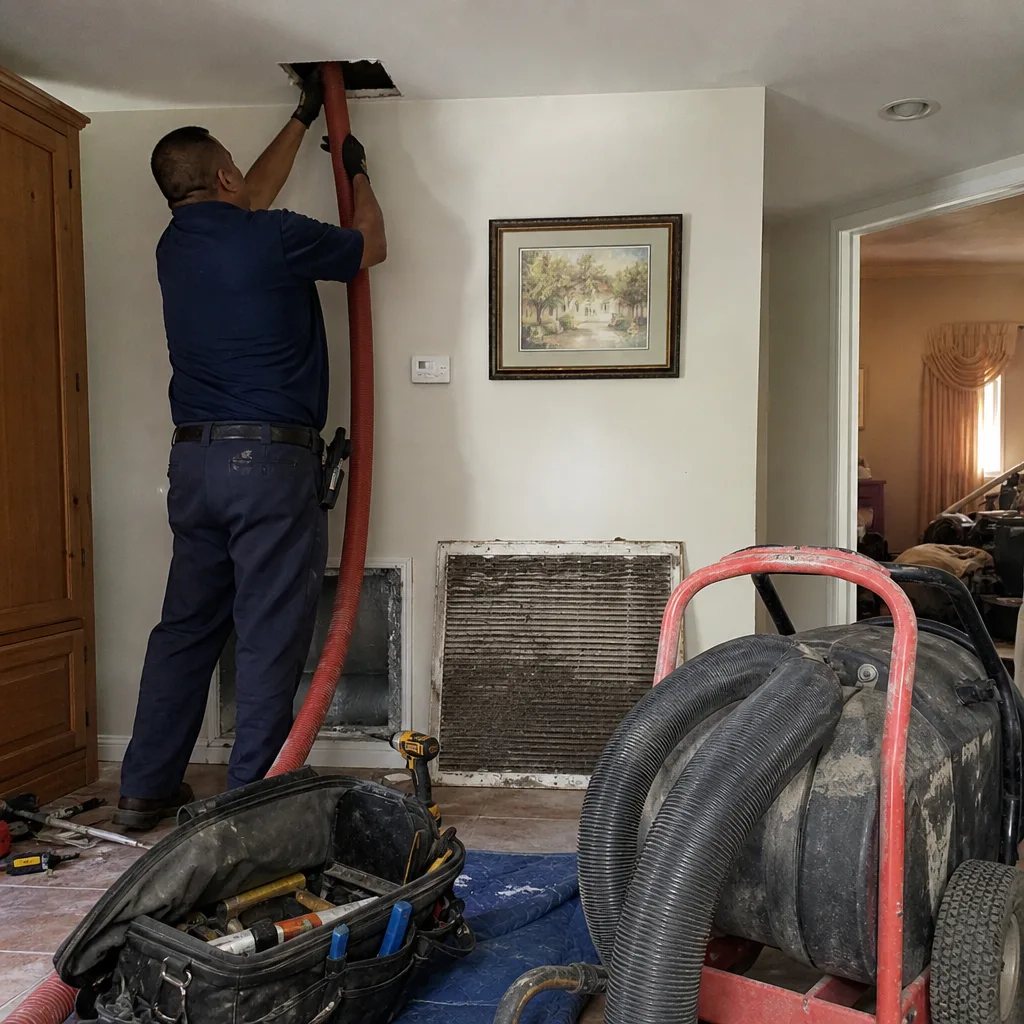 Before
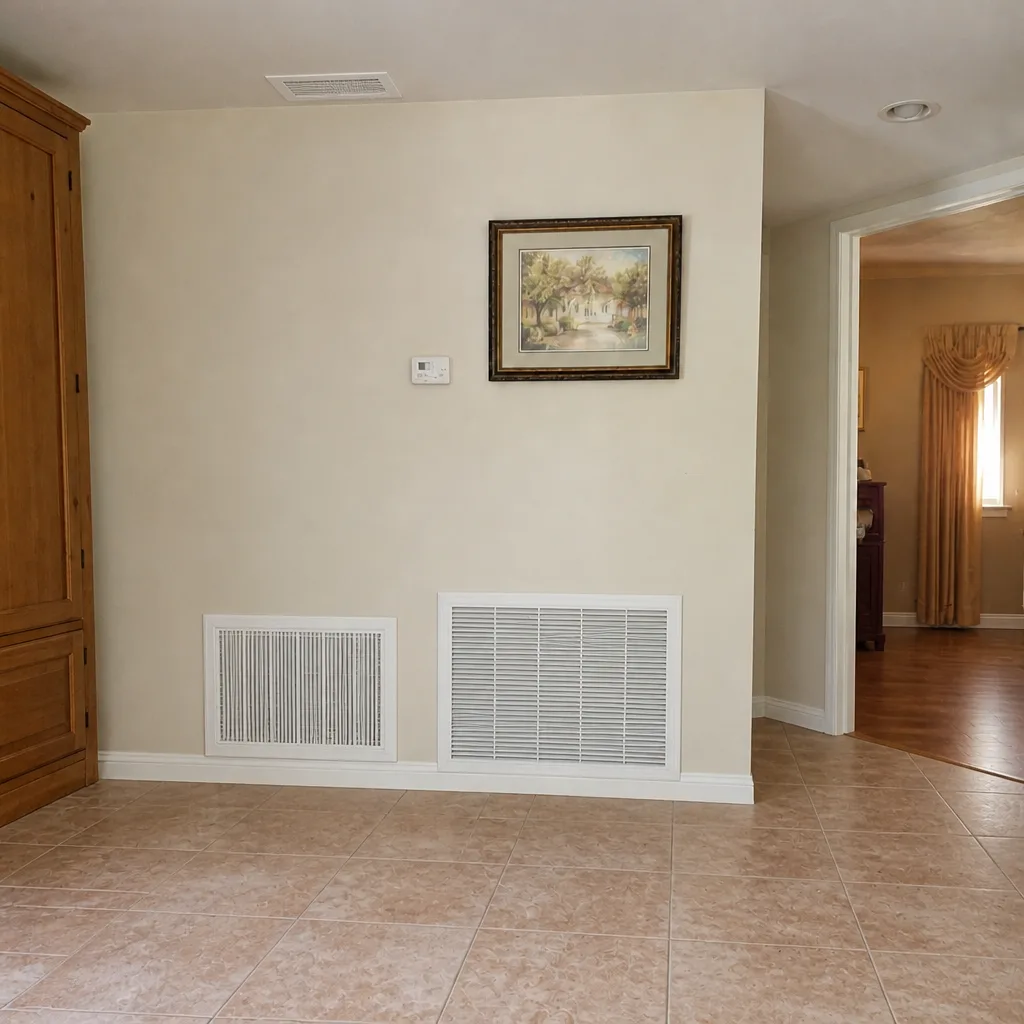 After
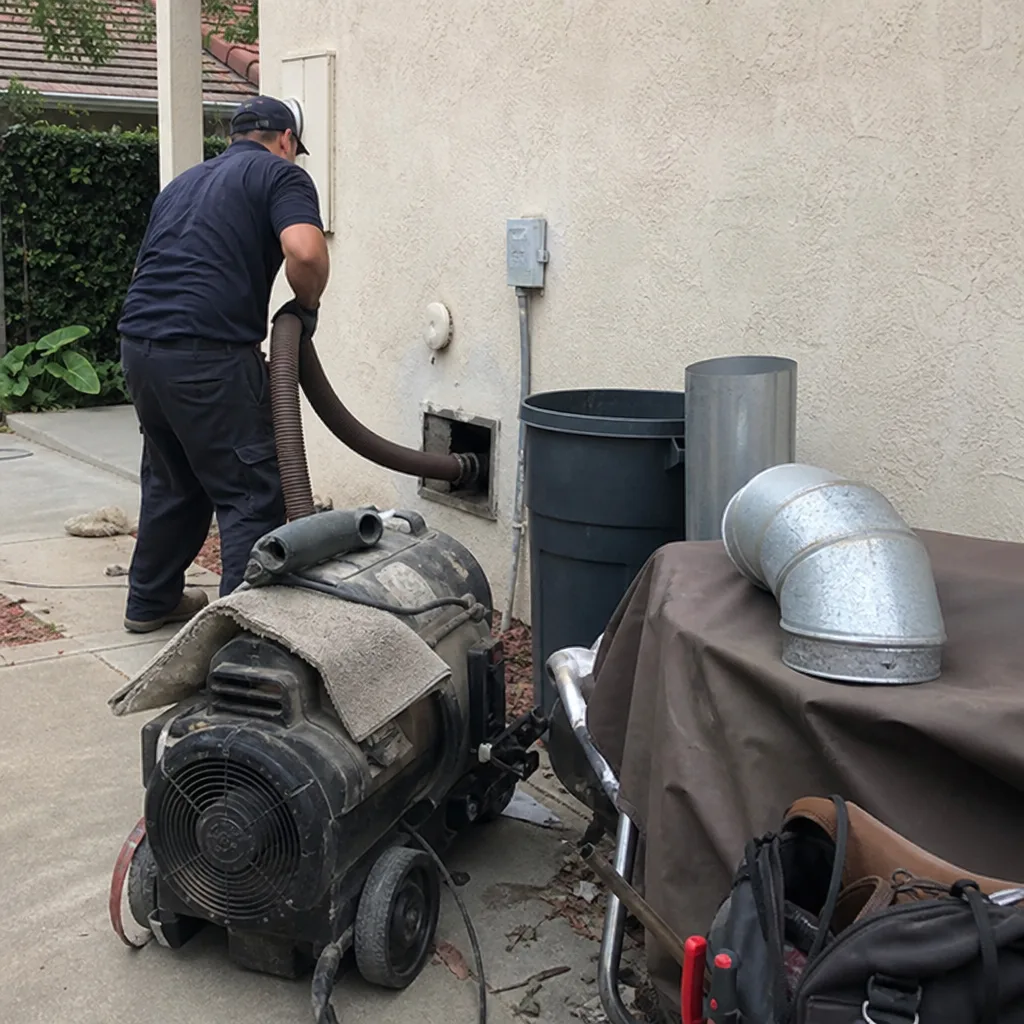 Before
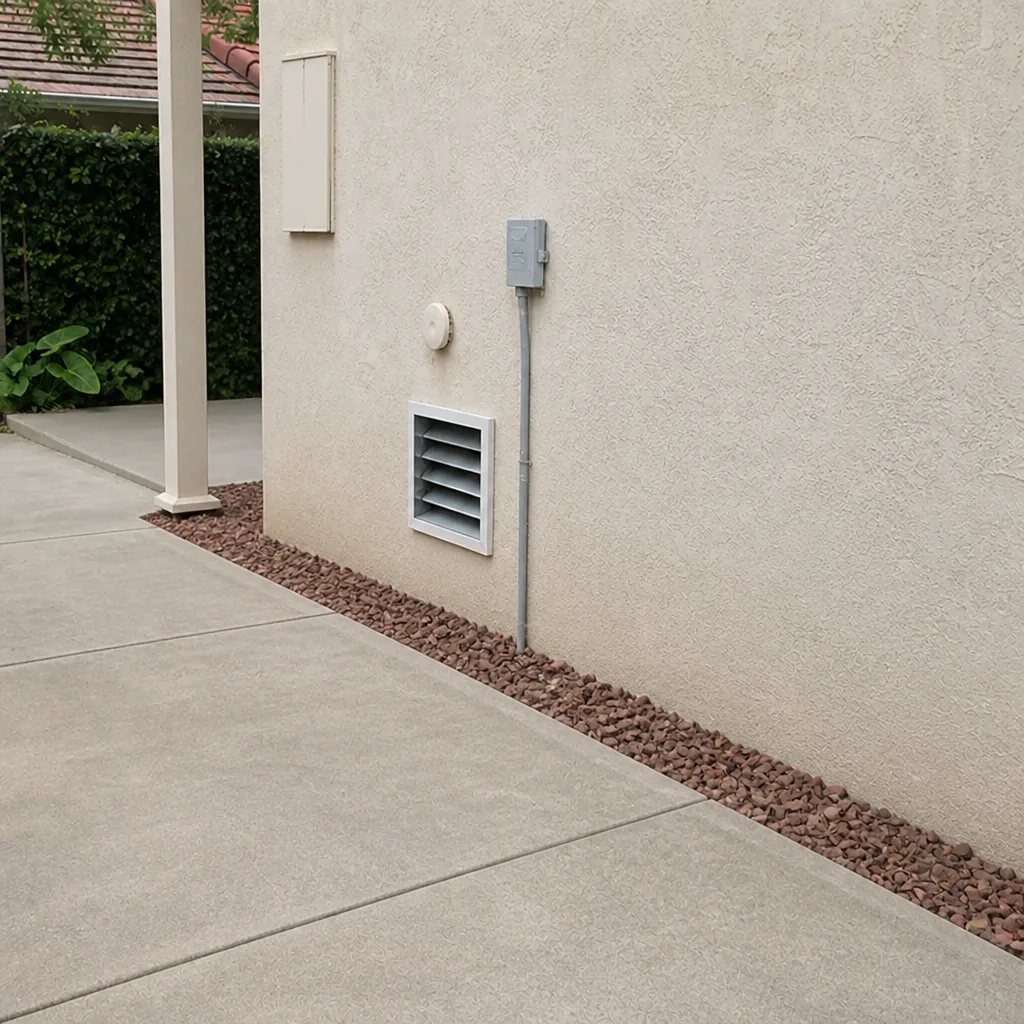 After
 Before
 After
Frequently Asked Questions
Most Costa Mesa homes with normal use benefit from a professional interior inspection every few years, with cleaning scheduled when the inspection shows interior build-up, a smoke event has loaded the system, or a renovation has drawn dust into the return path. The annual assessment on this checklist is the trigger: cleaning gets scheduled when the record shows a reason, not on a fixed timer. Call (855) 337-2150 for a free estimate in Costa Mesa.
The register grille is not the duct interior. Grilles catch the visible dust; the run behind them collects the finer loading, and in a Costa Mesa flex-duct system the interior wall and the inner liner are where the real condition sits. An interior inspection with a camera answers the question in a few minutes. Call (855) 337-2150 for a free estimate and we’ll photograph what we find.
It depends entirely on the system’s static pressure and the filter slot depth. A 1-inch slot running MERV 13 can be a real restriction on a home built with a basic filter; a deeper media cabinet changes what the system can carry without straining the blower. Measure before you upgrade. Call (855) 337-2150 for a free estimate, and we’ll take the readings during the assessment.
The assessment starts with a free estimate, and any recommended work is priced per job in writing before it begins. There are no per-vent charges and no teaser pricing; you see the findings and the quote together, plus before-and-after photos of your own system. Call (855) 337-2150 for a free estimate.
Change the filter first, then check the return grille and the ceiling around supply registers for a fine grey film. If you can wipe residue off a register louver, particulate has reached the duct interior and an interior inspection is warranted. Smoke-affected cleaning needs negative-air containment. Call (855) 337-2150 for a free estimate on a post-event inspection.
No. One call covers the full air pathway: ducts, dryer vents, HVAC coils, sealing and sanitizing. That matters because a dryer vent that’s loading up and a supply duct that’s leaking are separate problems in different systems, and having them looked at together gives you one condition record instead of two. Call (855) 337-2150 for a free estimate.
A subscription ships you filters; it doesn’t check your slot, your gaskets, your plenum collars or your static pressure. The app tells you when to change media and nothing else. The written log in this guide covers what a technician needs to see on arrival. Call (855) 337-2150 for a free estimate to get a baseline record started.
The Bottom Line
The checklist that matters is not a reminder to change a filter. It’s a structured protocol: monthly slot and return checks, quarterly flex-duct inspection at the plenum, runs and boots, an annual static-pressure assessment before summer, and event-triggered checks after Orange County smoke. Add a documentation log, keep filter MERV honest to measured pressure, and a technician walking in the door can see the pattern in five minutes instead of five visits. That’s what turns duct maintenance in Costa Mesa from a chore into a record of the system’s health. Our technicians have up to 9 years of experience, and we use Rotobrush and Nikro equipment and Abatement-grade negative air containment for the jobs that go beyond routine dust.
Contact
If you’d rather hand the checklist to a technician and get a full-system assessment with photographs, a written condition record and one flat price per system agreed before work starts, call (855) 337-2150 for a free estimate. One call covers the full air pathway: ducts, dryer vent, HVAC coils, sealing and sanitizing. You can also start with dryer vent cleaning or HVAC cleaning when that’s where the concern sits. We answer 24/7. Fast dispatch from 7am to 7pm, Sunday through Friday.
Written by the team at Costa Mesa Air Duct Cleaning Co.