
Last updated November 25, 2026
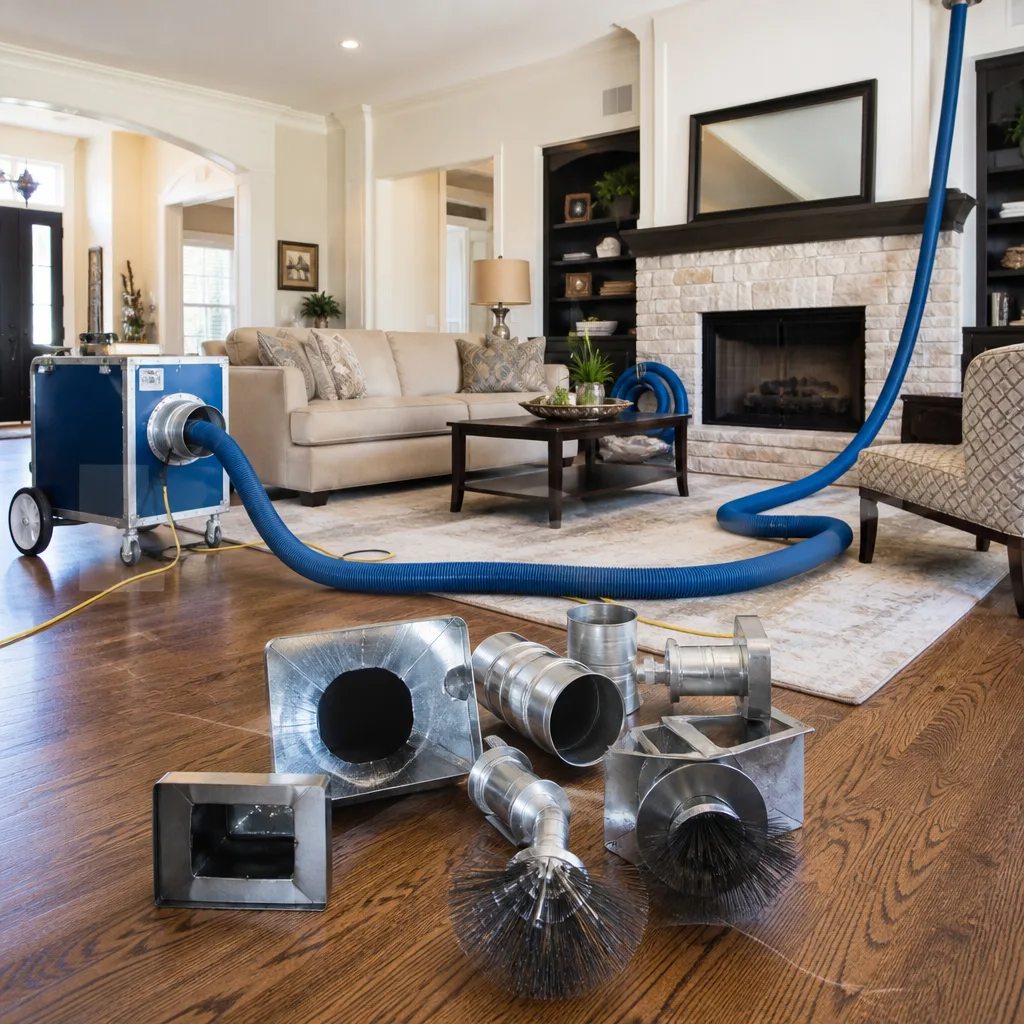 Whole-home duct cleaning
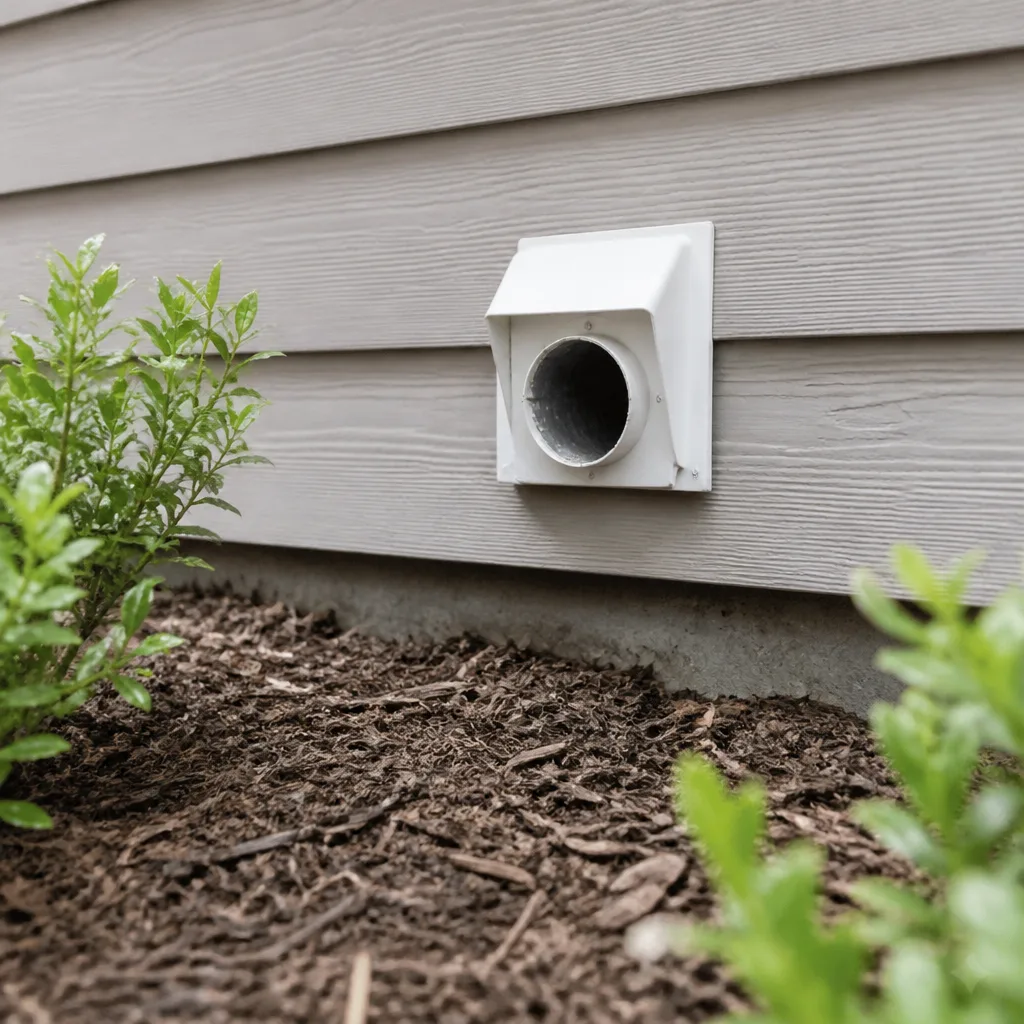 Dryer vent cleaning
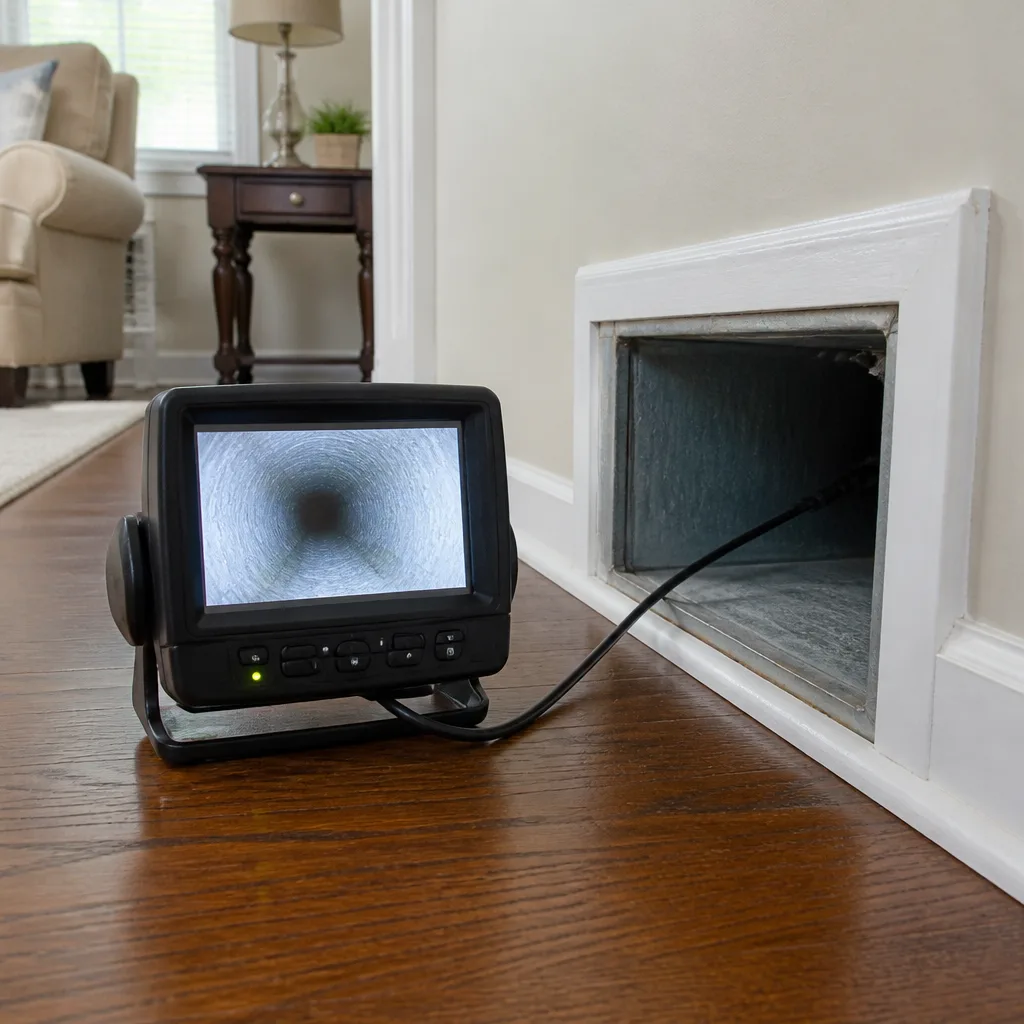 Camera inspection
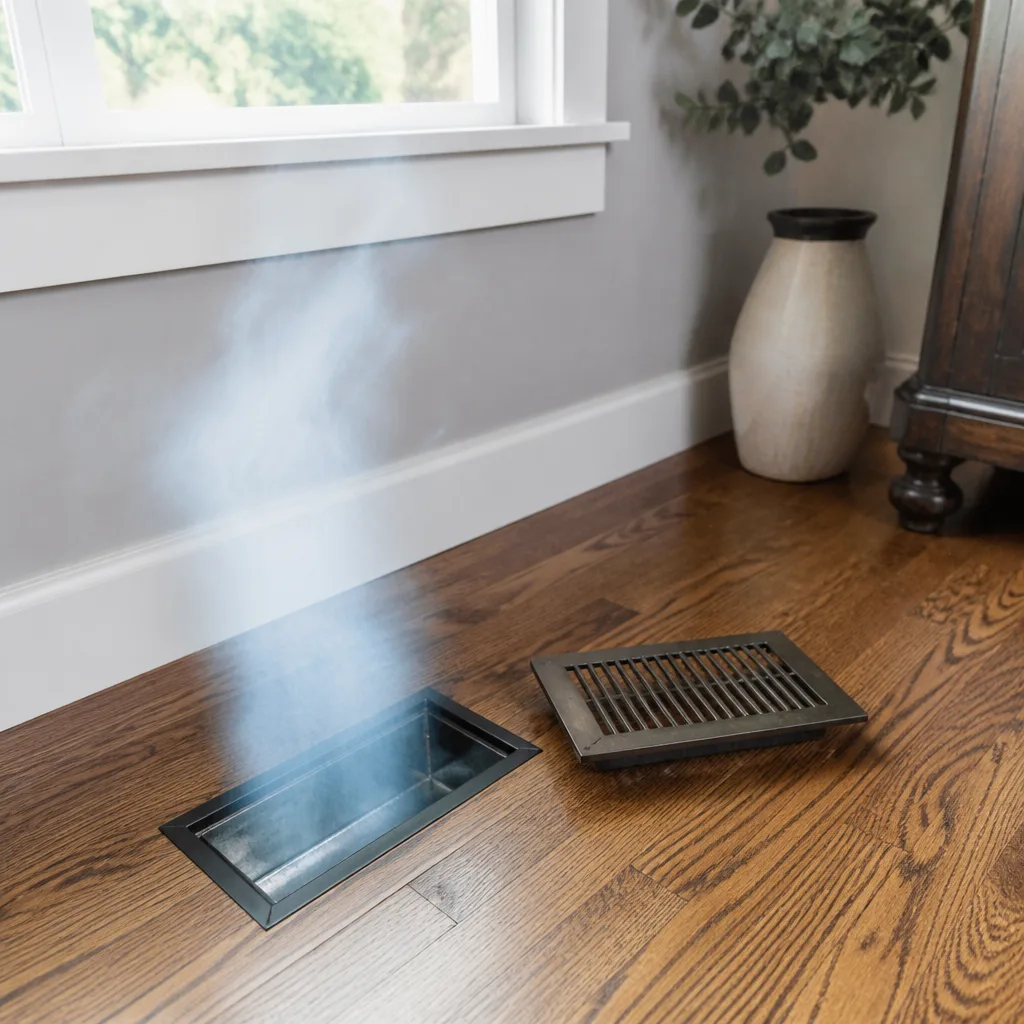 Sanitizing & deodorizing
Whole-system duct and dryer vent check with before-and-after photos - you see exactly what came out of your vents
That "$99 whole-house special" is a bait ad - the real number appears once they are in your hallway, or the "clean" is a shop-vac at the register. We photograph the inside of your ducts before and after instead.
The Complete Guide to Air Duct Cleaning in Costa Mesa
A duct cleaning that skips the blower compartment leaves behind the single dirtiest component in your entire HVAC system. That’s the part most “complete” cleanings never touch. The blower wheel sits at the end of the air pathway, spinning in whatever the return side sends it, and by the time a technician packs up and drives off, it’s still coated. The homeowner paid for a full system, got half of one, and won’t know the difference until the musty smell comes back. This guide explains how air delivery actually works in a Costa Mesa home, what a real inspection should document, and how to tell whether a cleaning was done or just billed.
Quick Answer
Air duct cleaning in Costa Mesa is a full-system diagnosis, not a spot treatment. It covers the return grille, the ducts, the blower wheel, and the evaporator coil. A legitimate job starts with a documented inspection (static pressure, camera findings, filter bypass) and ends with verifiable proof: before-and-after photos, airflow measurements, and a cleaned blower compartment. Anything less is a partial cleaning.
Styles & brands we work with
- Whole-home duct cleaning
- Dryer vent cleaning
- Camera inspection
- Sanitizing & deodorizing
Table of Contents
- Why Costa Mesa’s Air Loads Duct Liners Differently
- Cleaning Methods: Contact, Negative-Air, and Air-Sweep
- What a Legitimate Pre-Cleaning Inspection Documents
- How to Verify the Cleaning Actually Happened
- When Cleaning Alone Won’t Cut It: Sealing and Liner Replacement
- The Dryer Vent Belongs in the Same Conversation
- How to Choose a Duct Cleaner in Costa Mesa
- Common Mistakes to Avoid
Why Costa Mesa’s Air Loads Duct Liners Differently
Costa Mesa sits in a band of the county where two kinds of particulate show up together. One is the fine airborne material that hangs in the air on warm days and settles into return grilles and filter frames. The other is construction dust, which in Costa Mesa is a constant. The city has seen continuous redevelopment across its older commercial corridors and infill lots, and every remodel or demolition nearby sends a fresh plume of gypsum, silica, and wood dust into the neighborhood air. A home that keeps its windows open in spring pulls both into the return side.
That mix matters for how ducts load up. Construction dust is heavier than typical household lint and tends to fall out of the airstream early, coating the first few feet of return duct and the filter frame. Fine particulate travels further and settles on duct liners, especially in systems with flex duct, where the ribbed interior gives it something to grip. In our experience, a Costa Mesa home that’s gone through a kitchen or bath remodel tends to show a heavier coating near the air handler than an identical home in an inland city with no recent construction nearby.
The practical upshot is that a standard cleaning that runs a brush through the main trunks won’t address the settled layer where it actually accumulates. It also means any job that follows a renovation deserves a camera check of the return side before the technician ever starts pulling equipment from the van.
Housing Stock Also Plays a Role
Costa Mesa’s housing mixes postwar single-story homes with newer multi-level infill. Postwar homes often have original sheet metal trunk lines with short flex runs to the registers, and those trunks tend to accumulate a hard, dry film over time that a light vacuum won’t loosen. Newer construction tends to lean on flex duct in longer runs, which collects differently: more surface area, more ribbing, more places for dust to settle. A cleaner who quotes the same flat scope to both without looking at the system is guess-and-bill, not diagnose-and-clean.
Cleaning Methods: Contact, Negative-Air, and Air-Sweep
Three methods dominate professional duct cleaning, and they are not interchangeable. Each suits different duct types and different contamination levels. A quality job uses more than one, matched to the system in front of the technician.
Contact Vacuuming
A rotating brush or whip attached to a high-powered vacuum runs through the duct, physically scrubbing the interior walls while the vacuum pulls loosened material out. This works well on rigid sheet metal and on flex duct when the brush head is sized correctly. It’s the standard for lightly to moderately soiled systems. We use air duct cleaning equipment from Rotobrush for this kind of contact work, because the brush heads are designed to fit duct interiors without tearing liner material.
Negative-Pressure Source Removal
A negative-air machine draws the entire system under vacuum while the technician agitates the ducts from the inside. Air and loosened debris move toward the collection point rather than into the living space. This is the method of choice for heavier contamination, post-construction jobs, and any home where visible dust or musty odor suggests microbial growth. We use Abatement Technologies negative-air equipment, the same category of machinery used in professional remediation, for jobs that go past routine dust.
Air-Sweep
Compressed air is introduced at one end of the duct while vacuum pulls at the other, sweeping loose debris through the system. It’s useful for light surface dust and for reaching areas a brush can’t, but it’s not a substitute for contact work on a soiled liner. Air-sweep alone on a heavily loaded system mostly stirs material around. A responsible cleaner will tell you which method the job needs before starting, not after.
Which Method Suits Which Duct Type
- Rigid sheet metal trunks: contact brush plus negative-pressure extraction.
- Flex duct with ribbed liner: contact brush sized to the duct, backed by negative air; air-sweep alone won’t cut the settled layer in the ribs.
- Duct board: careful low-agitation contact work with the liner inspected before and after.
- Heavy post-construction load: negative-air containment first, then contact, then a documented sanitizing step.
What a Legitimate Pre-Cleaning Inspection Documents
An inspection that consists of a flashlight glance down one register isn’t an inspection. A real pre-cleaning assessment is a record of the system’s condition, and you should be able to ask for it and see it. Here’s what a documented inspection looks like.
- Static pressure readings across the air handler, taken before any cleaning. This is the system’s baseline for airflow, and it tells the technician whether the system is already working against a restriction.
- Visual camera findings with photos of the return side, the supply trunks, and the coil face. You should see the inside of your own ducts, not stock imagery.
- Filter bypass evidence. If the filter isn’t seating correctly, dust is going around it and into the blower. A bypassed filter is one of the most common reasons a system looks dirty again only months after a cleaning, and it’s easy to miss if nobody checks the frame.
- Blower compartment access and inspection. The blower wheel is the top of the air pathway, and it’s frequently the dirtiest single component. A technician who never opens that compartment hasn’t finished the job.
- Coil condition on the evaporator, documented before any cleaning so you can see the difference afterward.
Ask for this record in writing or as photos at the end of the inspection. Without it, you have no baseline to compare against and no way to judge whether the cleaning changed anything.
How to Verify the Cleaning Actually Happened
This is the question homeowners hesitate to ask, and it’s the one worth asking out loud. A legitimate cleaner will be glad to prove the work. Here’s what to request.
- Before-and-after photos of your own ducts. Not a stock binder. Your return drop, your supply trunk, your blower wheel. If you can see through the camera, you can see the change.
- Post-cleaning airflow measurements. Static pressure readings taken after cleaning, compared to the pre-cleaning baseline from the inspection. That’s a real number, not a promise.
- Blower compartment photo. The single most revealing image of any duct cleaning job. If the blower wheel wasn’t cleaned, the rest of the job is questionable.
- Coil face image. A dirty coil is hidden from daily view and easy to skip.
- A named sanitizing step. We use Guardsman sanitizing products, so the disinfection step has a product name attached and is traceable. If a cleaner can’t tell you what they’re applying, ask why.
Ask Before They Start, Not After
Verification works best when you set the expectation up front. When you book the job, ask: will I get before-and-after photos of my own ducts, will the blower compartment be opened and cleaned, and will I get airflow numbers before and after? If any of those answers is a no, the quote isn’t comparable to one that includes them.
When Cleaning Alone Won’t Cut It: Sealing and Liner Replacement
Cleaning removes contamination. It doesn’t fix the conditions that caused it. If the ducts leak, the system keeps pulling unfiltered air from attics, garages, and wall cavities, and any cleaning will be undone within a season. That’s why sealing and liner decisions belong in the same conversation as cleaning.
When Duct Sealing Is the Right Follow-Up
- Leaks are visible at joints, seams, or connections, especially around the air handler.
- Static pressure readings suggest the system is losing air between the handler and the registers.
- The system pulls air from a return path that isn’t properly sealed to the return plenum.
- Rooms near the end of a long duct run feel under-served while the handler is working.
Sealing is usually less involved than liner replacement. Foil tape and mastic at visible seams, combined with careful reconnection of flexible runs, closes the obvious paths. It’s done in the same visit as a cleaning when conditions allow.
When Liner Replacement Is the Right Follow-Up
Some duct failures aren’t fixable with tape. Duct board that has taken on moisture, or flex duct whose interior liner has separated or collapsed, needs to come out. If the camera shows a liner hanging into the airstream or spotty dark areas that don’t lift with contact cleaning, replacement becomes the honest recommendation. Any recommendation for replacement should come with photos and a written explanation of what was seen. A cleaner who hands you a liner replacement quote without showing you why is asking for trust they haven’t earned.
The Dryer Vent Belongs in the Same Conversation
Air delivery in a home runs two ways, and one of them has no relation to the HVAC system at all. The dryer vent is its own duct network, and it loads at least as fast as the supply side. Lint, moisture, and heat combine to form a dense, sticky layer along the vent walls, and that layer narrows the vent over time.
When we’re already at a Costa Mesa home for a duct cleaning, we look at the dryer vent because the equipment and the setup are the same. Proactive dryer vent cleaning clears that layer back to bare metal and restores proper exhaust flow. It’s easier to add to the same visit than to schedule separately. And the same negative-air equipment used for the ducts works here too, though on a smaller scale.
If you notice the dryer taking longer per load, or the outside vent flapper doesn’t open fully while it runs, that’s the sign to have the vent checked. It’s not a plumbing or HVAC problem, and it’s often missed because it doesn’t smell bad the way ducts can.
Where the HVAC System Fits In
Ducts are the plumbing. The HVAC equipment is the pump, and cleaning one without the other leaves the pathway half-serviced. The evaporator coil sits at the air handler, and it’s the surface most likely to collect the fine particulate that makes it past the filter. A loaded coil has to work harder to move the same amount of air, and that shows up as longer runtimes and higher energy bills in a Costa Mesa home.
We treat HVAC cleaning as part of the same visit for that reason. The coil face gets cleaned, the blower wheel gets cleaned, the drain pan gets cleared, and the whole air handler is checked in sequence with the duct work. One crew, one visit, one record of what was found and cleaned. The alternative is booking a duct cleaner and an HVAC tech separately and hoping their scopes align.
Filtration and Humidity Solutions
Once the system is clean, filtration is the thing that keeps it that way. We work with Honeywell and Aprilaire filtration products, and the right choice depends on the system and the home. A media filter cabinet is more effective than a standard slot filter because it seals better, and that removes the bypass problem entirely. For homes that struggle with humidity, a whole-home solution from the same brands gives you control that a portable unit can’t match.
How to Choose a Duct Cleaner in Costa Mesa
The industry carries a reputation for bait-and-switch, and it’s earned. A low advertised price that balloons into a much larger invoice once the technician is on site is the pattern you want to avoid. Here’s how to pick a cleaner who won’t play that game.
- Ask for a flat price per system, agreed in writing before work starts. Not a per-vent price. Not a coupon price that becomes an upsell. A written estimate for your specific system.
- Ask what equipment the cleaner carries. A single-tool operation can’t do contact and negative-air work on the same job. Multiple platforms matter because different methods suit different duct types.
- Ask about the blower compartment. Whether the blower wheel is cleaned is the clearest signal of scope. If the answer is vague, that’s your answer.
- Ask whether photos and airflow readings are included. A cleaner who plans to skip documentation will say so when asked.
- Ask how they handle sealing and sanitizing. A full-scope cleaner can do repair, sealing, and a named sanitizing step in the same visit. A cleaner who stops at vacuuming will hand off the next step to someone else.
Our technicians have up to 9 years of experience across duct, HVAC, and dryer vent work, and we quote one flat price per system based on the written estimate. If the inspection shows the job needs sealing or liner replacement, we show you why with photos before the scope changes.
Common Mistakes to Avoid
- Paying per vent instead of per system. Per-vent pricing punishes homes with more registers and rewards the cleaner for doing less. A whole-system flat price is comparable from one quote to another; per-vent isn’t.
- Letting a cleaning skip the blower compartment. The blower wheel is frequently the dirtiest single component. A job that doesn’t open that compartment hasn’t touched the top of the air pathway.
- Booking a cleaning after a remodel without a camera inspection first. Costa Mesa construction dust settles early in the return side and loads heavier than ordinary household dust. A blind cleaning misses where it lands.
- Accepting a quote without a static pressure reading. Without a pre-cleaning baseline, there’s nothing to compare against afterward. The post-cleaning reading is the proof, and you can’t get one without the other.
- Assuming the filter is sealing properly. Filter bypass lets dust go around the filter and into the blower. It’s easy to miss without checking the frame, and it makes every cleaning look like it didn’t work.
- Skipping the dryer vent on the same visit. The dryer vent loads at least as fast as the supply ducts. Adding it to the same appointment is simpler than a separate call.
- Choosing a cleaner who won’t show before-and-after photos of your own ducts. Stock images in a binder prove nothing. Your ducts, your photos, taken during the job.
See the difference
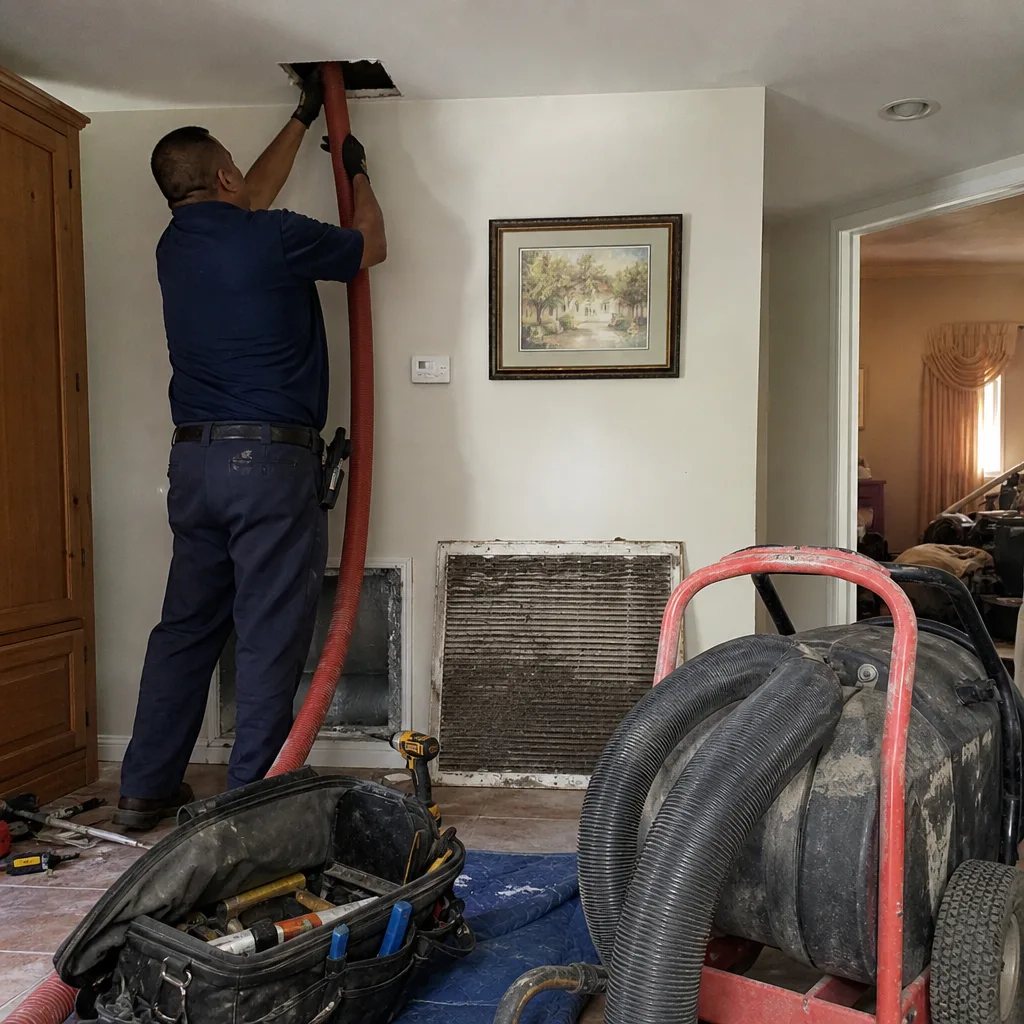 Before
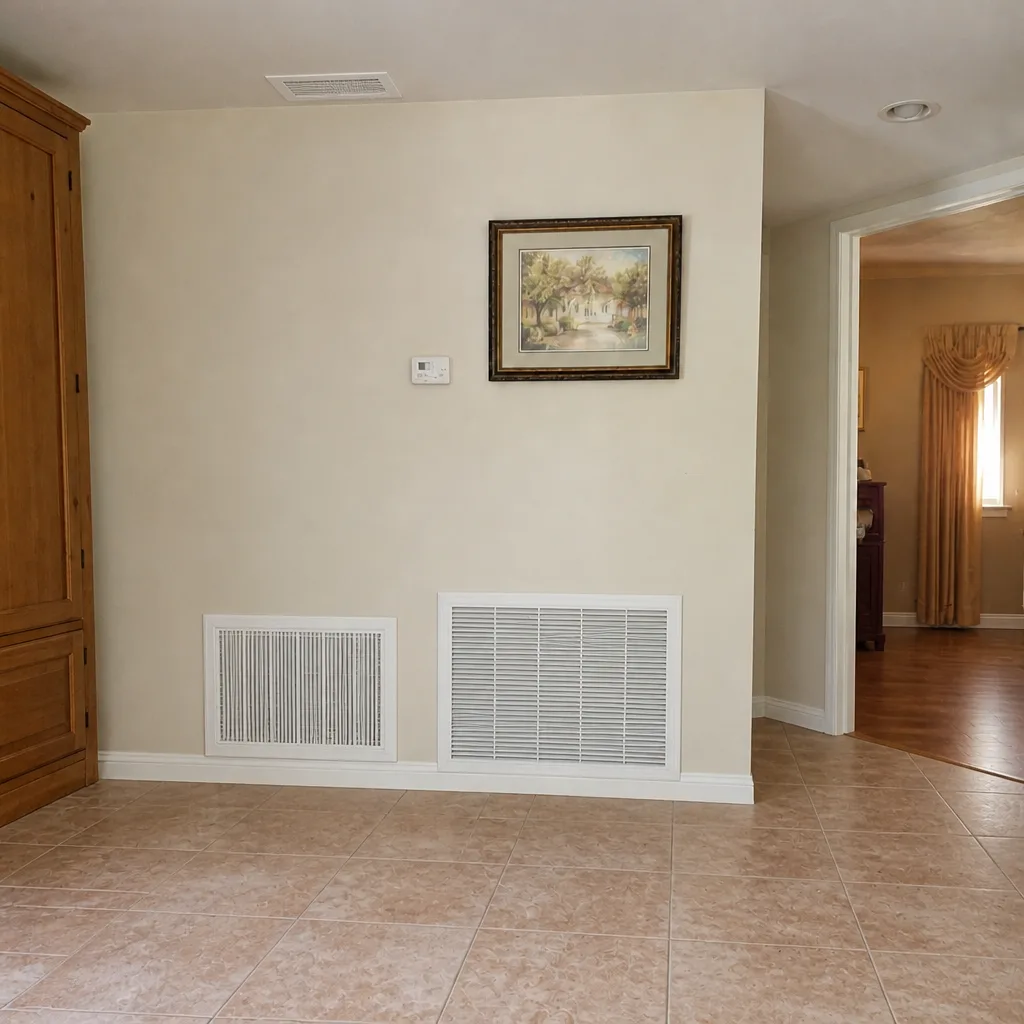 After
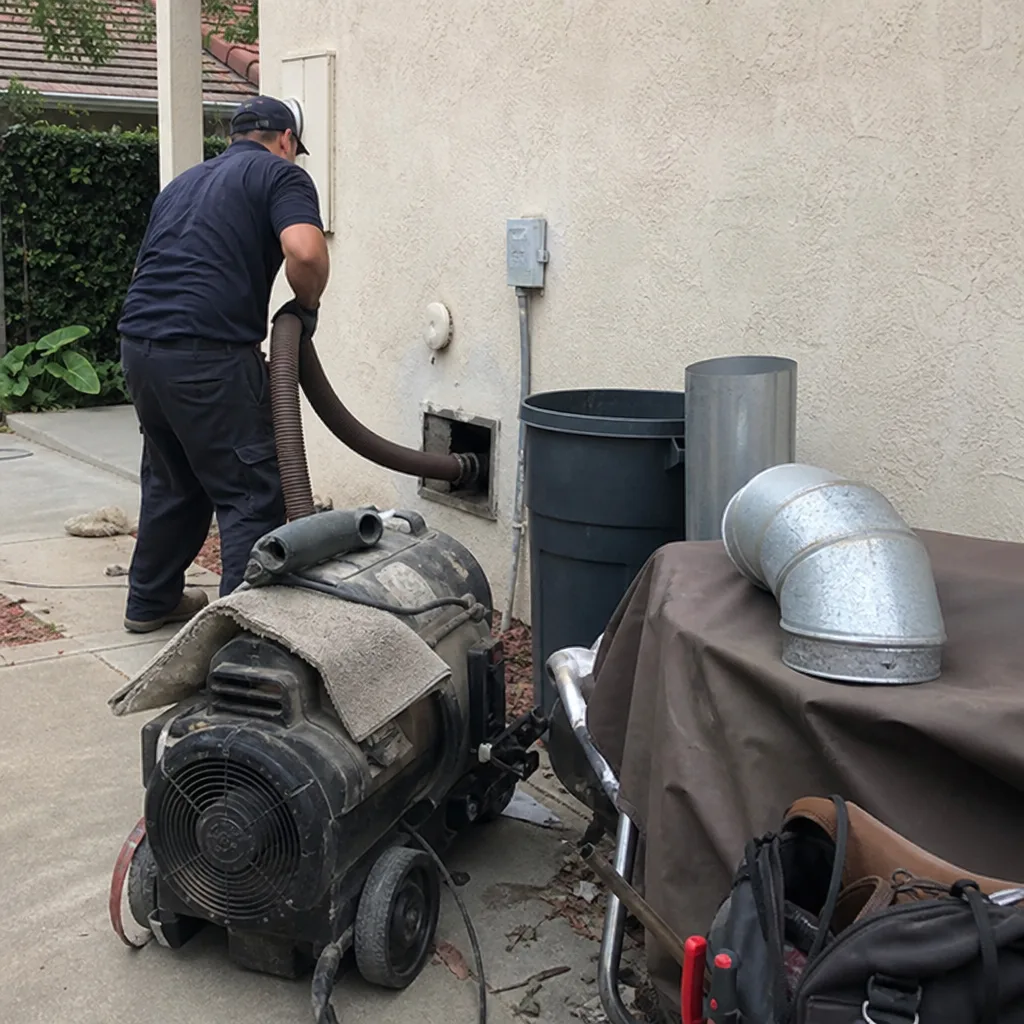 Before
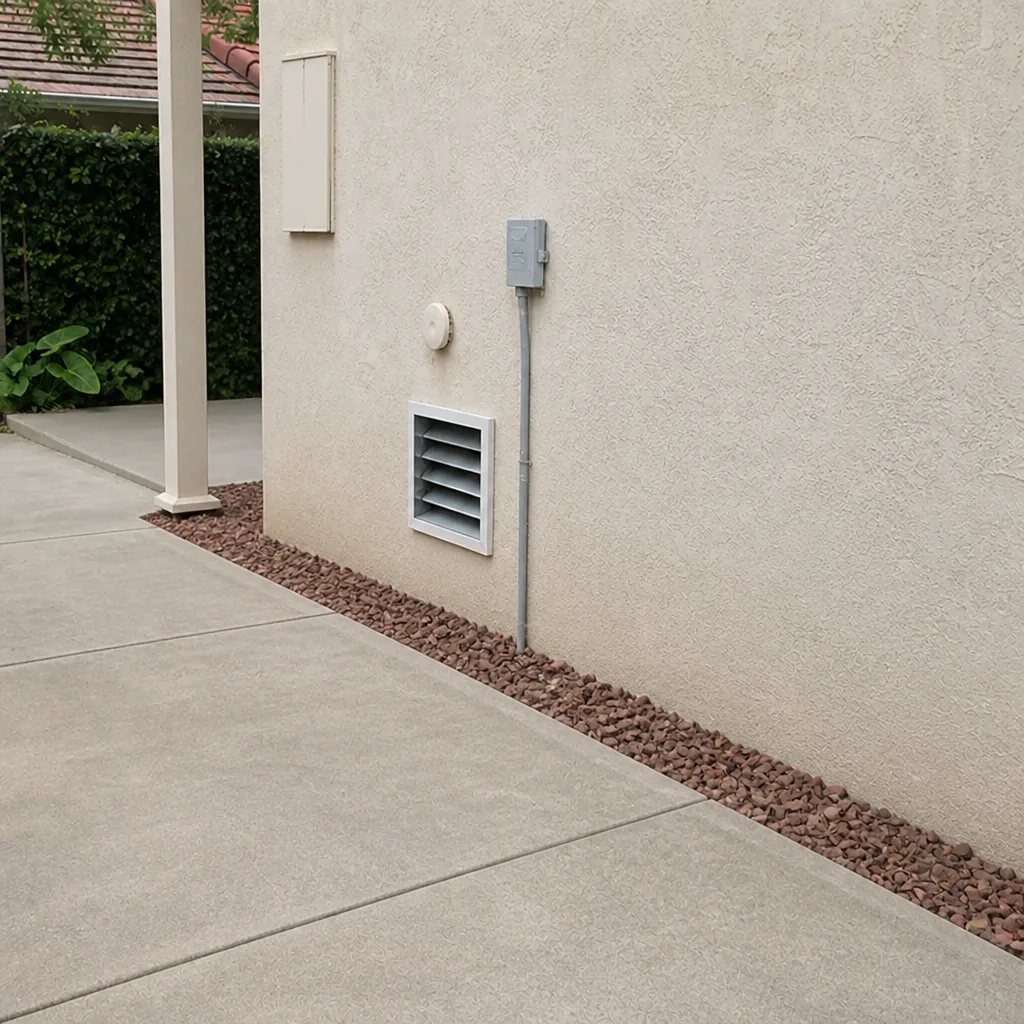 After
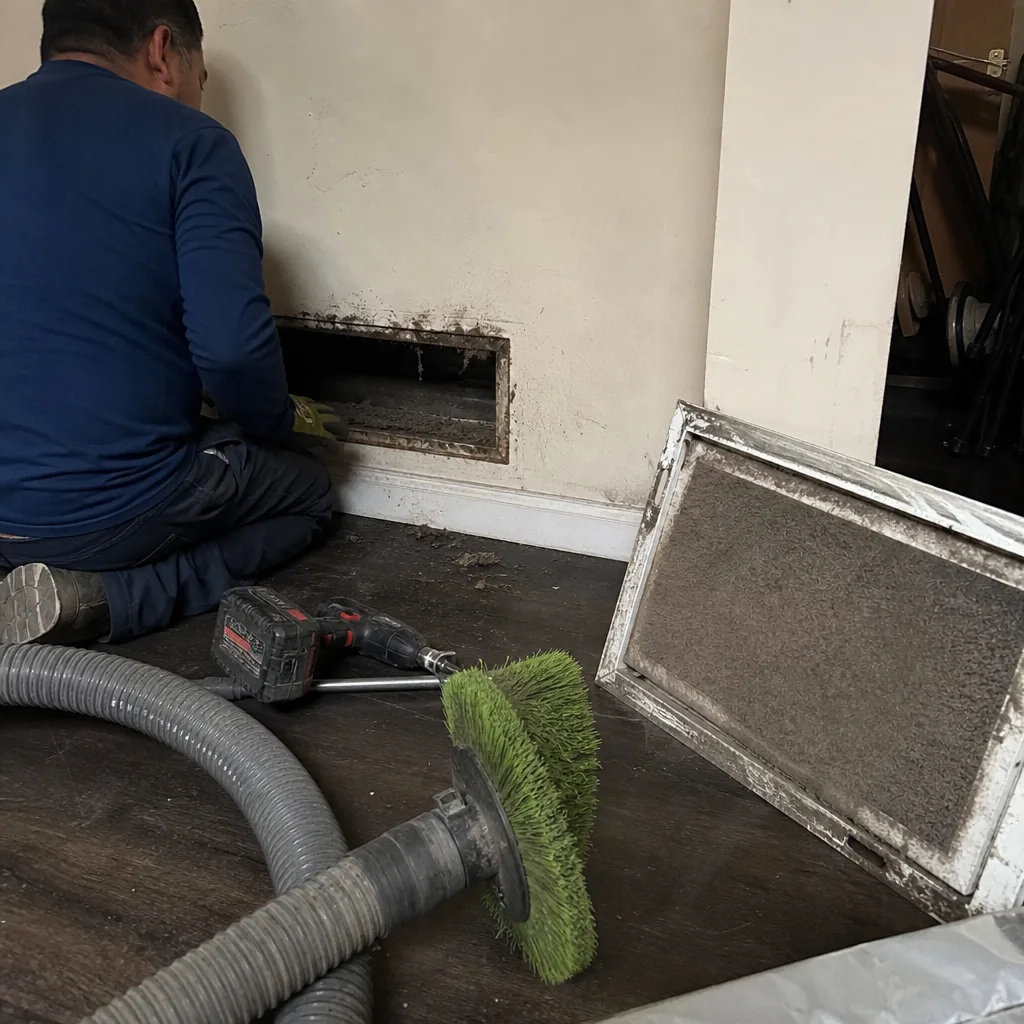 Before
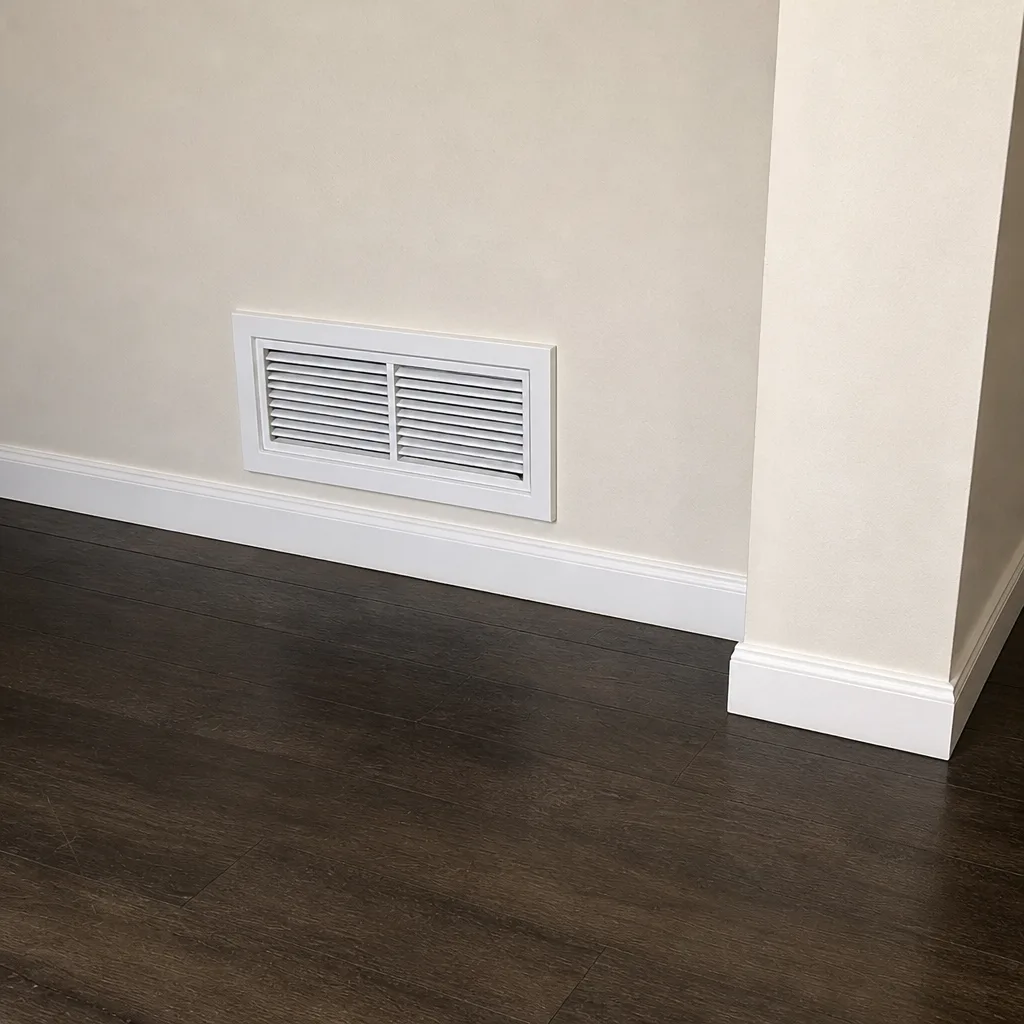 After
When to Call a Professional
Some situations call for a call rather than another weekend of noticing. If you’ve just finished a remodel or a major patch-and-paint, the return side has taken on construction dust that no consumer vacuum can reach. If a musty odor appears when the system first kicks on and doesn’t clear after a filter change, microbial growth is a candidate and warrants a camera inspection. If anyone in the home has new or worsening allergy symptoms that track with HVAC runtime, that’s a reason to look. If the dryer is taking noticeably longer per load, check the vent. And if it’s been several years since the last service and nobody has actually looked inside the ducts, the inspection itself is the point.
Costa Mesa Air Duct Cleaning Co offers free estimates in Costa Mesa. Call (855) 337-2150 and we’ll book an inspection around your schedule.
Frequently Asked Questions
Most whole-home duct cleanings in Costa Mesa run on a per-system basis rather than a per-vent price, and the written estimate sets the final number after the inspection. Call (855) 337-2150 for an exact quote. Estimates are free.
For most homes, a cleaning every few years is a reasonable baseline, but the honest answer depends on the system and what’s happening around it. Homes that have just finished a remodel, or that sit near ongoing construction in Costa Mesa, tend to need it sooner than the calendar suggests. A camera inspection answers the question better than a rule of thumb.
Cheap quotes usually leave out the parts that matter: the blower compartment, the coil face, negative-air containment, and documented before-and-after photos. They may also be a teaser price that grows into a larger invoice on site. A flat price per system, agreed before work starts, is the honest comparison.
Ask for before-and-after photos of your own ducts, airflow readings before and after, and a photo of the blower wheel. Set those expectations when you book. If a cleaner won’t provide them, the job scope is unclear. Call (855) 337-2150 for an exact quote on a job that includes documentation.
Yes. Both jobs use the same equipment and the same visit. Adding the dryer vent to a duct cleaning visit is simpler than scheduling it separately, and we check both sides of the air pathway while we’re there.
If the inspection shows leaking seams or a liner that won’t hold after cleaning, sealing or liner replacement becomes the honest recommendation. We show photos of what we found before recommending a scope change. Costa Mesa Air Duct Cleaning Co handles cleaning, repair, sealing, and sanitizing in one visit. Call (855) 337-2150 and we’ll talk through what your system needs.
Do we need duct cleaning after a renovation in Costa Mesa?
An inspection after any significant remodel is worth doing. Construction dust from nearby development and work inside the home settles heavier in the return side than ordinary household dust. A camera check confirms whether a cleaning is warranted rather than guessing.
The Bottom Line
Duct cleaning in Costa Mesa should be treated as a full diagnostic of the air-delivery system, not a single event. That means a documented pre-cleaning inspection with static pressure readings and camera findings, a cleaning that covers the return side, the supply trunks, the coil face, and the blower wheel, and proof of the work in before-and-after photos and airflow measurements. If the inspection shows leaks or a compromised liner, sealing or replacement belongs in the same conversation. One flat price per system, agreed in writing before the work starts, is the fair way to buy it. Our technicians have up to 9 years of experience, and we handle dryer vent cleaning, HVAC cleaning, duct repair, sealing, and sanitizing as part of the same visit. For a free estimate from the team at Costa Mesa Air Duct Cleaning Co, call (855) 337-2150. We answer 24/7. Fast dispatch from 7am to 7pm, Sunday through Friday.
Written by the team at Costa Mesa Air Duct Cleaning Co.